

South Africa has a few rather big problems. Economic growth is sluggish. More than 60% of people aged 15 to 24 are unemployed. In April, the International Monetary Fund downgraded the country’s 2026 growth forecast from 1.4% to 1.0%.
And someone at the Salesforce Agentforce World Tour said the quiet part loud: you cannot distribute wealth that does not exist.
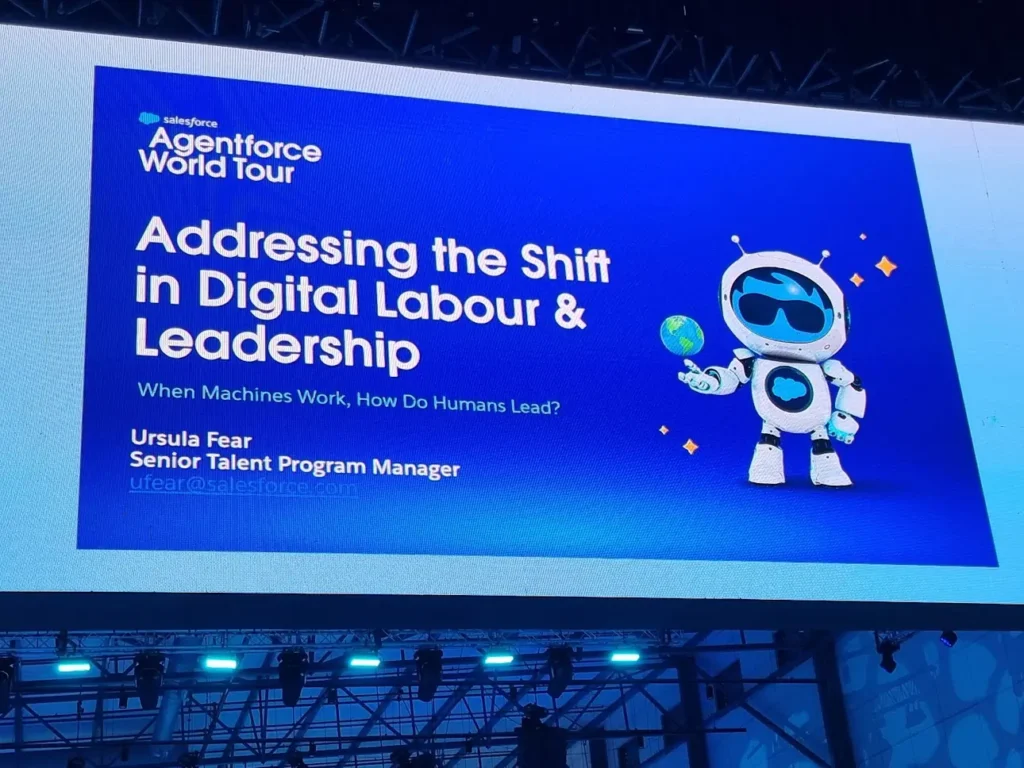
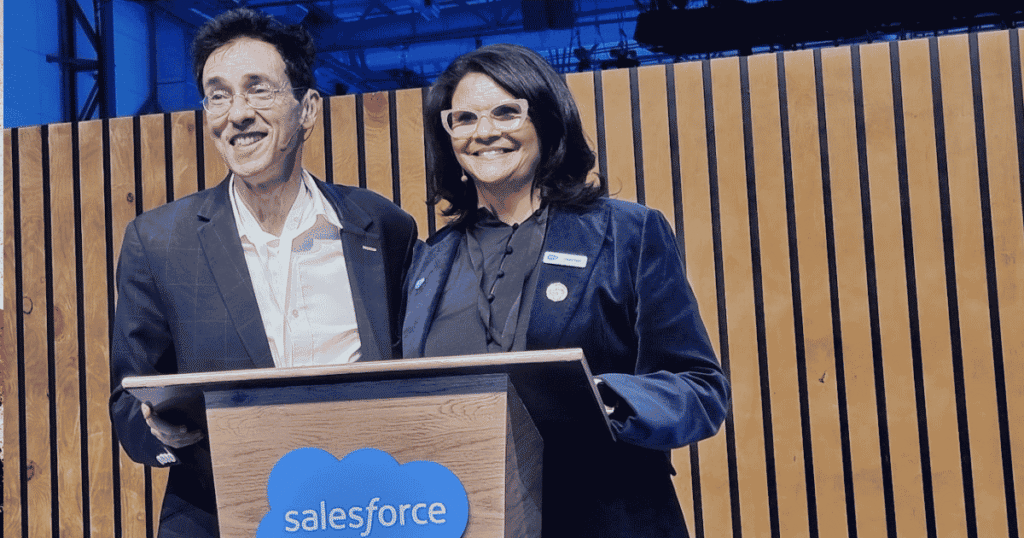
That was Dr Taddy Blecher, CEO and co-founder of the Maharishi Invincibility Institute, speaking at a breakout session on digital labour and leadership. He shared the stage with Ursula Fear, Salesforce’s Senior Talent Programs Manager.
The session, titled “Addressing the Shift in Digital Labour and Leadership: When Machines Work, How Do Humans Lead?”, was framed around the question of what happens to human potential when AI starts doing more of the work.
The answer, according to both speakers, is not what most people are arguing about.
The real problem is not AI
Dr Blecher was direct about it. The biggest threat to progress is men with big egos. Not artificial intelligence. Unchecked ego, he said, is what produces and waste, and what is keeping economies like South Africa’s running with “hands and arms tied.”
He pointed to global instability as evidence: Iran, Palestine, Ukraine. It is a harder argument to make in a room full of enterprise software customers. He made it anyway.
Dr Blecher acknowledged AI displacement anxiety is real. Companies will cut costs. But his view is that South Africa cannot afford to sit this one out.
If AI can help a business grow 5x or 10x (and it does!), the instruction is simple: do it. Distribute the gain, but only if there is gain to distribute.
“How do you run a country where 61% of youth are unemployed?” he asked. “We can’t accept that as a country.”
The education system is the actual legacy problem
The deeper argument Blecher has spent decades making, is about education (and not about AI). His premise is that the school system built over the last 200 years was never designed to develop human beings. Instead, it produces obedience.
Read about The Maharishi Invincibility Institute here:
FEATURE: The students no one wanted. The results no one expected
The Maharishi Invincibility Institute takes young people who don’t qualify for university, places thousands into jobs, and is now building Johannesburg’s very own Education Town.
May I go to the toilet? May I speak? May I exist? The operating framework of legacy eduction is “right” or “wrong” and absolutely no room for anything else.
Children are, by his account, extraordinary before they enter the system. Creativity among pre-school children sits at around 95%. By the time they reach Grade 1, that figure drops to 35%. By Grade 2, it drops further.
He joked (but it’s not really a joke, is it?) that the worst thing to happen during early childhood is to send a child to Grade 1. The second biggest, sending that child to Grade 2.
Blecher’s question to the room: should we still be teaching children to memorise mathematics? His answer is no, because humans were not designed to be robots. And robots are now better at doing robot things than humans are. Why spend all our energy memorising maths when robots should be doing that now?
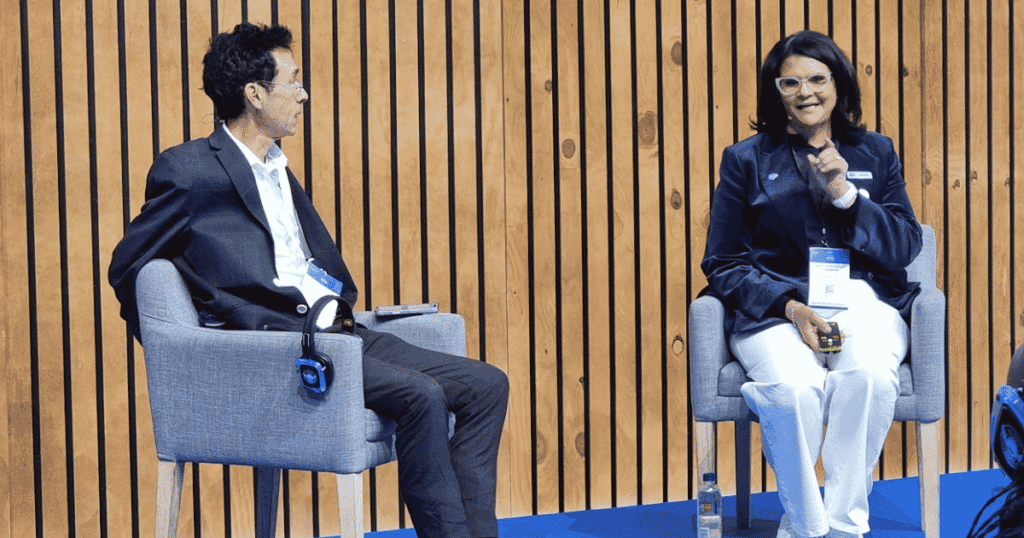
Real intelligence, by his definition, is the development of human qualities. Respect. Caring. Kindness. These qualities are not programmable and not achievable through rote repetition.
And they are precisely what an agentic era will need more of, not less.
ALSO READ: It’s 1999 all over again: Salesforce puts SA at the centre of agentic AI
Africa can leapfrog, but only if it moves
The session opened with the premise that Africa can be at the forefront of the AI transformation. That kind of statement usually gets filed under wishful thinking.
Blecher’s version of it was more grounded. He pointed to M-Pesa as the template: Africa skipped the bank-branch model entirely and did not even bother to replicate what the West built. Instead, it built what the West could not, because the West was already committed to the older infrastructure.
The same logic applies to AI adoption.
China, he noted, is moving fast, and the government is rolling out AI literacy at scale. Meanwhile, American university students are booing speakers who mention AI off stages.
Only one of those populations will be employable in ten years…. ¯\_(ツ)_/¯
Africa has not yet locked in the old ways of doing things in every sector. That is an advantage if it is used.
“Don’t limit people,” Blecher said. “Give knowledge freely. We could leapfrog.”
That said, Dr Blecher was not naively optimistic. He acknowledged the need for guardrails, but he was clear that the only real prison is fear, and that freedom from fear is what makes any of this possible.
What the agentic era asks of leaders
Ursula Fear’s framing for the session was the leadership dimension: when machines are doing the work, what is the human job?
Her position is that consciousness-based approaches to leadership will help organisations navigate the AI transition with purpose.
Neither speaker suggested AI is not useful. Both suggested that the framing of AI as primarily a threat to jobs misses the more pressing failure, which is that the economy is not growing fast enough to absorb people who are already here, already skilled, and already being left out.
Blecher’s closing logic was straightforward:
- Humans are adaptable, we always have been.
- Find purpose early, not during retirement.
- Never bet against a human being.
- Start with what you love.
- Build together.
The session was one of the better ones of the day, because it did not pretend the optimism was free.