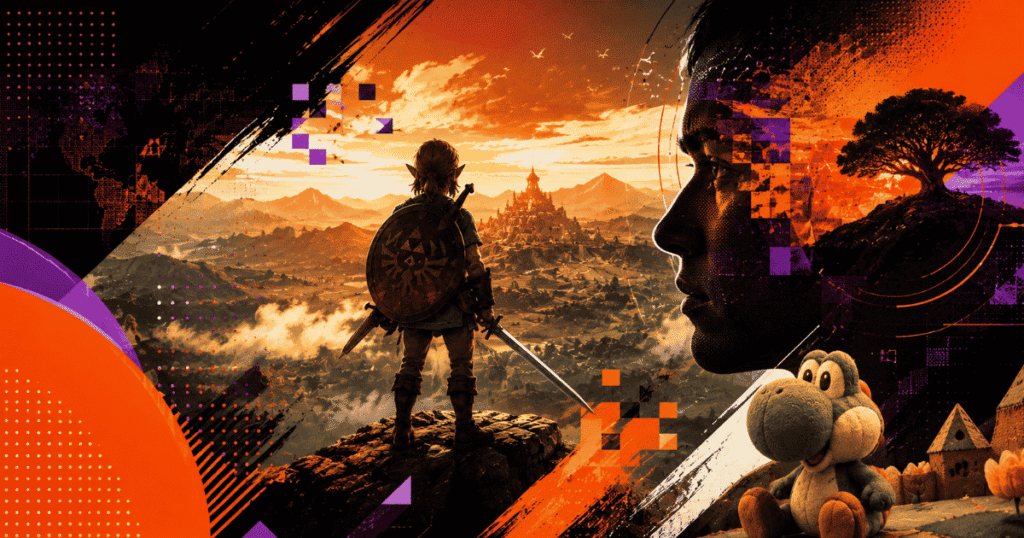

A new study confirmed what most of us already knew: open-world gamers score lower on loneliness than non-players.
A cross-sectional survey of 2,252 adults has found that people who play The Legend of Zelda: Breath of the Wild score measurably lower on loneliness than people who do not, and that Yoshi’s Crafted World, produces the same pattern through a different mechanism.
Stoicism and loneliness
The study, published in JMIR Serious Games in June 2026 by researchers from Kyushu Sangyo University in Japan and Imperial College London, is the first to put stoicism forward as the psychological pathway that connects gameplay to reduced loneliness[1].
How they measured loneliness
Stoicism here is not a vague character trait.
The researchers used items adapted from a validated scale developed by LeBon and colleagues in 2026 to measure specific, observable attitudes: whether participants reflected on the temporary nature of things, whether they considered what was within their control before acting, and whether they focused on their own response to a problem rather than complaining about the situation itself.
Loneliness was measured using three questions adapted from validated scales, asking how often participants felt a sense of emptiness, felt there was no one to turn to, and felt they lacked companionship. Both scales ran from 1 to 7.
Three research assistants, blind to the study’s research questions, approached potential participants near a video game store in a busy shopping mall over five weeks. Of 2,300 enrolled, 48 did not complete the questionnaire and were excluded, giving a final sample of 2,252, a 97.9% completion rate.
Participants were aged 21 and older. Women made up 42.9% of the sample, men 56.9%. Gaming experience was not required for inclusion; the study compared non-players against people who currently or recently played the focal games.
Data were analysed using analysis of variance (ANOVA) and moderated mediation via the PROCESS macro, with 5,000 bootstrapped samples and 95% confidence intervals.
What the numbers show
On stoicism, Zelda players averaged 4.87 out of 7, against 3.23 for non-players, a statistically significant difference (F=164.95; p less than 0.001). Yoshi players averaged 4.49, against 3.61 for non-players (F=48.33; p less than 0.001).
The two game types also interacted significantly on stoicism scores (F=7.89; p=0.005): players who reported both games showed a stronger effect than either group alone.
On loneliness, Zelda players averaged 3.02, against 4.28 for non-players (F=98.32; p less than 0.001). Yoshi players averaged 3.09, against 4.21 (F=76.32; p less than 0.001). Gender had no significant effect on either stoicism or loneliness.
The moderated mediation analysis showed that Zelda gameplay was positively associated with stoicism (beta=1.28; 95% CI 1.07 to 1.50; p less than 0.001), and stoicism was negatively associated with perceived loneliness (beta=0.49; 95% CI 0.52 to 0.45; p less than 0.001).
When Yoshi gameplay was added as a moderator, the indirect effect of Zelda on loneliness through stoicism strengthened: the effect size moved from 0.63 without Yoshi to 0.98 with it.
In plain terms: playing Zelda appears to build something that looks like stoic thinking, and that stoic thinking is associated with feeling less lonely. Adding Yoshi to the mix amplifies both.
Why these games, specifically
The researchers argue the design of each title maps onto stoic principles in ways that are not incidental. Zelda drops its protagonist, Link, into a harsh, open world with no inventory and no guidance.
Players forage, cook, scavenge for weapons, and fail constantly before making progress. The game reinforces the idea that the resources you need are already within you, which the authors identify as a direct parallel to stoic self-reliance.
Yoshi’s Crafted World works differently. Its hand-crafted, cardboard-and-yarn aesthetic is built for present-moment attention: the goal is often simply to stop, look around, and find something small and pleasant.
The researchers argue this counteracts rumination, which is a driver of loneliness, by anchoring players in what the Stoics called attention to the present moment.
Together the authors label the combination a “digital diet,” with Zelda building resilience and Yoshi restoring it.
What this study does not show
This is a cross-sectional survey, so all variables were measured at the same point in time and thus the direction of causality cannot be confirmed. It is possible that people who are already less lonely, or already more stoically inclined, are simply more drawn to these games.
The authors acknowledge this explicitly and flag the mediation findings as exploratory.
The sampling method introduces further limits. Participants were approached near a game store in a single shopping mall, which makes the sample self-selecting in ways the researchers could not fully control.
The study also did not collect data on the general gaming habits of people who answered no to the focal games, so whether the comparison group consisted of strict non-gamers or players of other genres remains unclear. Socioeconomic status, marital status, living arrangements, baseline social contact, and social media use were not captured.
The stoicism measure is entirely self-reported. The authors call for future work using objective stoicism measures, and for longitudinal studies that can establish whether gameplay actually shifts stoic thinking over time, or whether the association runs the other way.
Why loneliness is the right target
Chronic loneliness carries a 26% increased risk of premature mortality and has been linked to elevated cortisol, increased inflammation, weakened immune function, high blood pressure, and heart disease.
The World Health Organization and the U.S. Surgeon General both recognise the loneliness epidemic as a formal public health crisis. Conventional mental health services face well-documented barriers like cost, availability, and stigma.
The researchers note that video games, by contrast, are widely accessible and require no appointment.
That argument has real limits
Hardware and game costs are a barrier for lower-income populations, and a cross-sectional survey near a game store is a long way from a clinical trial. The researchers do not claim otherwise.
What they do claim, more carefully, is that the stoicism pathway they have identified is novel, measurable, and worth investigating in controlled longitudinal conditions.
I find the stoicism framing the genuinely interesting part here. Loneliness interventions have historically leaned on social connection: get people talking, get people together.
This study is asking whether the internal architecture of how someone thinks about being alone matters at least as much. That is a different question, and the numbers, however preliminary, do not dismiss it.
Sources:
[1] Hou, Congcong, Winze Tam, Andini Ayu Rahmadianty, Pradana Rajendra, and Andreas Benedikt Eisingerich. The Effects of Open-World and Fun, Accessible Games on Perceived Loneliness and Stoicism in Adults: Cross-Sectional Survey Study. JMIR Serious Games, June 17, 2026.