
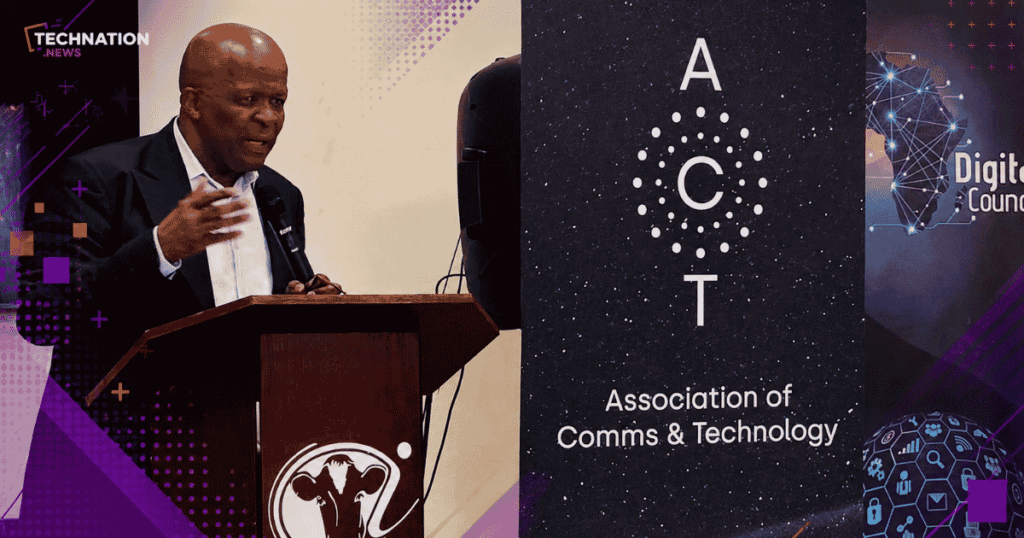
Deputy Minister Mondli Gungubele believes South Africa is asking the wrong question about women in technology.
Speaking at the Digital Conversations Women’s Breakfast at Irene Farm in Pretoria, he argued that the conversation should not be about representation anymore, but about unlocking economic potential.
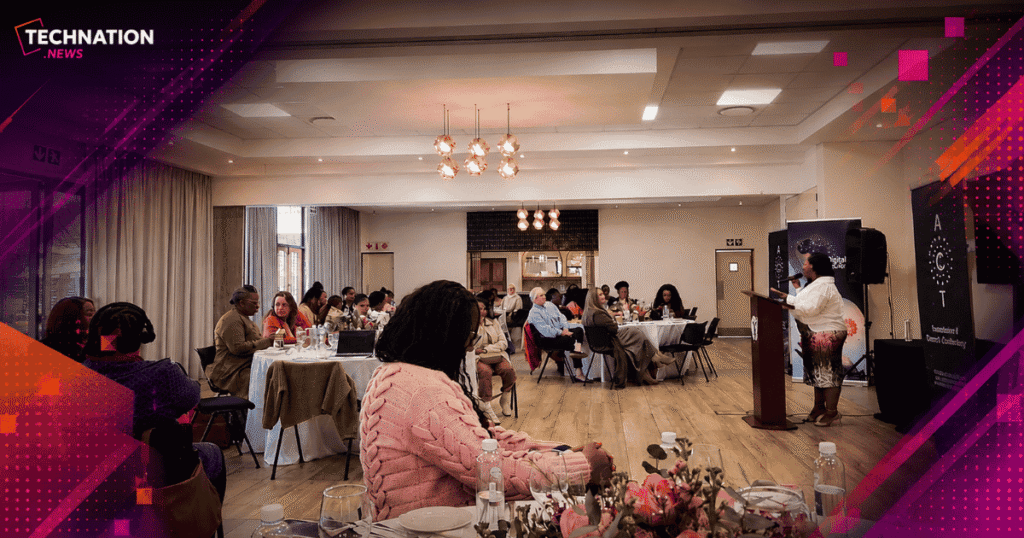
Digital Conversations Women’s Breakfast
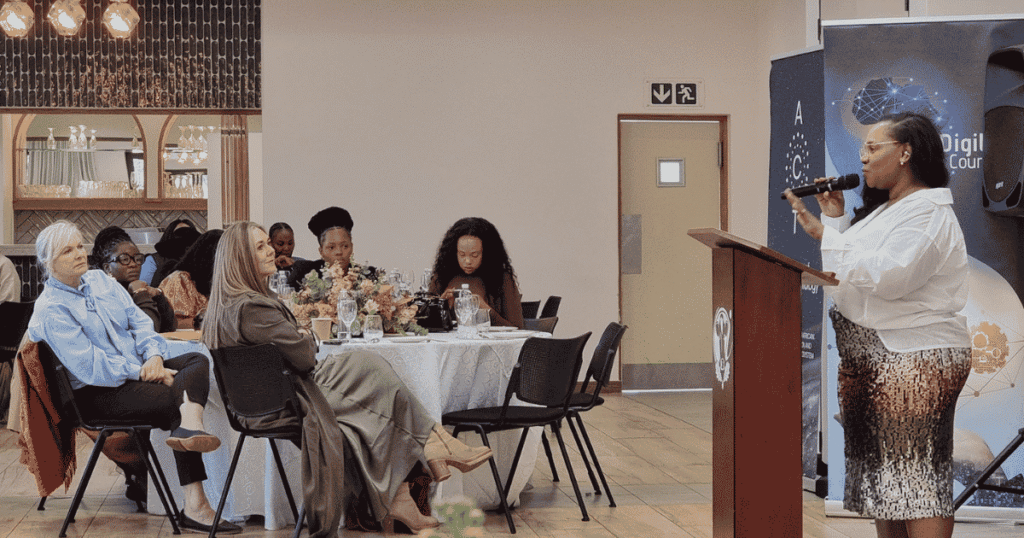
The event was hosted by Digital Council Africa in partnership with the Department of Communications and Digital Technologies (DCDT) and the Association of Comms and Technology (ACT).
It brought together women from across South Africa’s ICT sector to mark Women’s Month under the theme Women Leading the Digital Future: Advancing Inclusive Growth and Transformation.[1] Digital Council Africa CEO Juanita Clark welcomed a room full of women working across South Africa’s digital and technology sectors.
The economic cost of exclusion
The keynote focused on the scale of the opportunity ahead. Minister Gungubele argued that “70% of the economic value in the next decade will come from digitally based platform business models” and said South Africa would need leaders who understand that shift.[2][†]
The Deputy Minister said the question the sector keeps asking itself is the wrong one. “Within the sector, we often ask ourselves how we get more women into the sector. But in my view, that is the wrong question to ask. The real conversation is the potential of women in the sector,” he said.
“Every brilliant woman excluded from opportunity represents innovation our country never benefits from. The cost of excluding women is not measured only in individual careers. It is measured in national competitiveness,” Gungubele said.
ALSO READ: The most useful leadership theory I’ve heard came from Minister Gungubele
Showing up in rooms built for someone else
The conversation then moved from economic strategy to lived experience. For Nonkqubela Jordan-Dyani, Director-General of the DCDT, the focus was on the daily reality of showing up in male-dominated spaces and keeping yourself intact while doing it.[3]
“You constantly have to justify yourself. You have to justify yourself for why you’re at the table, and why you’re sitting at the top,” she said. Her response to that pressure, she told the room, was to own it completely.
“Yes, I am. I own it. I own all aspects of it.”
If the sector waits for it to happen organically, she said, it won’t. “The only time they will do it is if it is obligatory. And when they do, they’ll do just the minimum requirements and nothing more.”
Jordan-Dyani also noted the 70th anniversary of the 1956 Women’s March. No one in the room was old enough to have been there, she said, but the work those women started is unfinished.[§]
ALSO READ: SA’s poverty map still looks like the apartheid homeland borders
Building the pipeline
By the time the programme reached what organisers called the Power Hour, the emphasis had shifted again from diagnosis to action. MICT SETA board member and ICT and Innovation Committee chairperson Nomonde Gongxeka-Seopa outlined the organisation’s current work and where it is trying to create opportunities for women in the sector.[4]
SETA has developed more than 60 qualifications aligned to Fourth Industrial Revolution (4IR) technologies and established 20 research chairs across public and private universities, with close to 1,500 beneficiaries funded through postgraduate research focused on 4IR.[‡]
A further 100 cooperatives have been established and supported. The MICT SETA is also the only one of the country’s 21 SETAs mandated by the Department of Higher Education and Training to establish a dedicated 4IR department.
A constitutional obligation
On the partnership with the event’s host, she said MICT SETA has trained more than 50 women on fibre programmes in collaboration with Digital Council Africa. Twenty-five of them have since been absorbed by Digital Council as employees.
Gongxeka-Seopa framed all of it as a constitutional obligation. The country’s founding institutions, from SITA to Broadband Infraco to NEMISA, were deliberately created to use technology as an equaliser.
“Technology is the greatest equaliser and intervention in addressing inequities,” she said.
She spoke from personal experience as much as institutional mandate. Ten years at the SABC, a stint at MultiChoice Africa, a contract with the GSMA, a councillor appointment in eThekwini to what was then the first council to have six women in the majority in that role.
None of it, she said, would have been possible without the democratic dispensation that opened those doors.
Sources
[1] Digital Conversations Women’s Breakfast — Event Programme.” Digital Council Africa, Aug. 7, 2026. [Event programme and invitation materials supplied to TechNation News.]
[2] Gungubele, Mondli. Keynote address, Aug. 7, 2026. [Transcript: min_g_gungubele.m4a]
[3] Jordan-Dyani, Nonkqubela. Welcome address, Aug. 7, 2026. [Transcript: nonkqubela_jordan_dyani.m4a.]
[4] Gongxeka-Seopa, Nomonde. Guest address (Power Hour), Aug. 7, 2026. [Transcript: guest_note_speaker.m4a.]
Footnotes:
[*] Audio transcripts were produced using TechNation News’s AI reporting stack. See our AI methodology and tools disclosure.
[†] The estimate that roughly 70% of new economic value created over the next decade will rely on digitally enabled platform business models is drawn from World Economic Forum analysis on the digital economy and platform-based growth.
[‡] The MICT SETA has established a dedicated Fourth Industrial Revolution (4IR) programme that includes future-skills qualifications and research-chair initiatives. The figures cited in this article were provided by Nomonde Gongxeka-Seopa during her address at the Digital Conversations Women’s Breakfast and align with MICT SETA’s published 4IR strategy and programme materials.
[§] The 1956 Women’s March took place on Aug. 9, 1956, when about 20,000 women marched to the Union Buildings in Pretoria to protest apartheid pass laws. South Africa commemorated the 70th anniversary of the march in 2026, and National Women’s Day is observed annually on Aug. 9 in its honour.