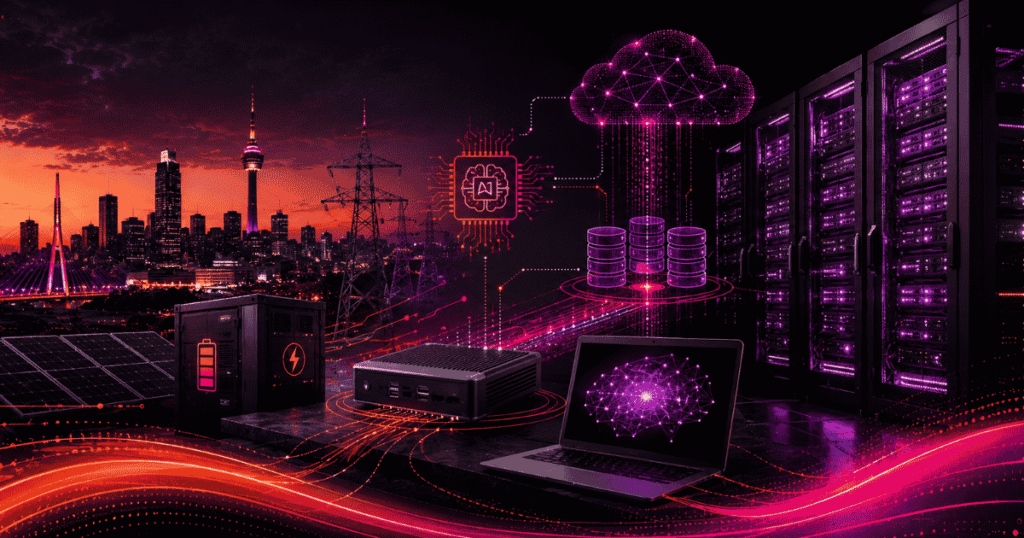

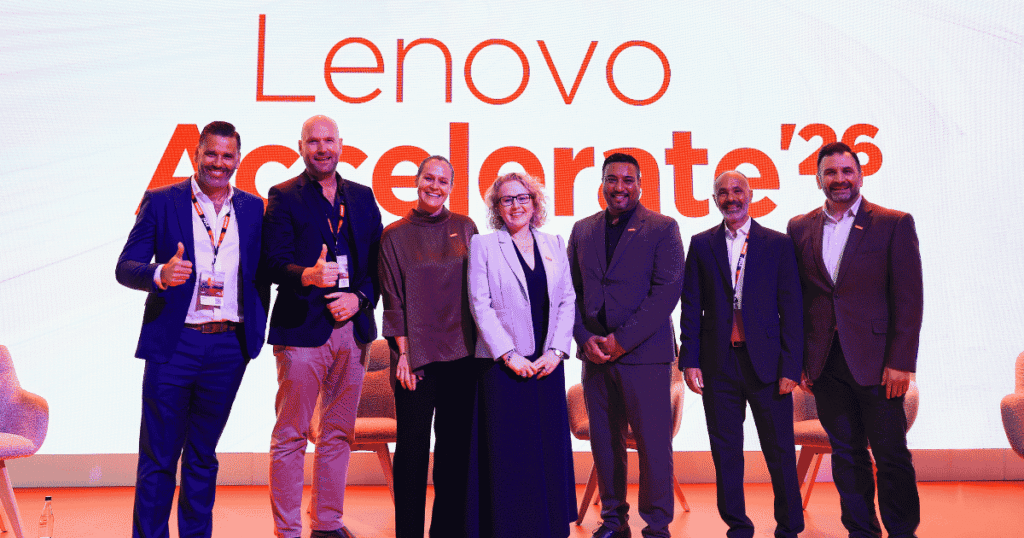
Lenovo wrapped up its Accelerate 2026 Southern Africa summit in Johannesburg, and the message to regional businesses was clear: stop testing AI and start actually using it for something.
The event comes off the back of strong numbers globally. Lenovo reported 84% year-on-year growth in AI-related revenue, which now makes up 38% of the company’s total group revenue.
Southern Africa contributed double-digit growth across key business units, and the regional relaunch of Motorola is apparently going well too.
The AI problem in SA
Here’s the issue Lenovo spent a chunk of the summit addressing.
Southern African companies want AI to deliver real results, but they’re stuck dealing with things like patchy energy supply, network latency, and data laws that require information to stay within certain borders.
Yugen Naidoo, General Manager of Lenovo Southern Africa, framed it as a bigger shift in priorities: “These financial milestones reflect a systemic shift in how African enterprises are prioritising technology investments. Our growth in infrastructure and services across Southern Africa indicates that organisations are actively laying the physical and operational foundations required to operationalise AI. This transition is built entirely on localised collaboration and deep ecosystem trust.”
The actual list of headaches is fairly specific. Large language models need more computing power than most setups can comfortably handle. Cloud-based tools slow down when the network lags. Compliance rules around data are getting stricter. And power cuts remain a real risk to keeping AI systems running at all.
Lenovo’s answer
Lenovo’s answer is something it calls hybrid AI, which basically means splitting AI work across devices, private company servers, and the public cloud instead of dumping everything into one place.
ALSO READ: AI in SA: 66% workers save a full workday weekly with AI
Chadie Ghadie, CTO and ISG Leader for Lenovo MEA, explained the logic:
“Successful enterprise transformation is intrinsically outcome-driven. To move AI from the cloud to the edge, we must solve real-world physical constraints. This requires matching localised data processing with infrastructure optimised for efficiency and security.”
Lenovo pointed to specific hardware built for this approach. The ThinkEdge SE455i V3 handles local processing close to where data is actually generated, cutting down on lag. The ThinkSystem SR650i V4 is built for dense, cost-effective processing inside data centres.
And Neptune Liquid Cooling tackles the power problem directly, reducing how much energy data centres burn through while running demanding AI workloads.
It’s gonna take team effort
A panel discussion closed out the summit, featuring Fiona O’Brien, VP of Sales Transformation and Enablement for Lenovo Europe and META, alongside Andrea Talmacsi, Marketing Director for Lenovo META. Their point was that no single company can pull off this kind of shift by itself.
O’Brien put it directly: “Whether accelerating Device-as-a-Service (DaaS) models, securing distributed endpoints, or deploying localised AI models, no single entity can drive transformation in isolation. Ecosystem collaboration is the true differentiator in unlocking scalable, low-risk innovation.”
Lenovo also used the summit to flag its partnership with FIFA, where it’s serving as the official technology partner for what’s being billed as the first AI-driven World Cup, covering everything from real-time analytics to stadium operations and fan experience tech.
ALSO READ: Your security tools found 847 problems. Now what?