
Most men will tell you they are against gender-based violence (GBV). But what are they doing about it?
This was the question driving The Anele Podcast: Her & Now, a two-part episode made for the 16 Days of Activism for No Violence Against Women and Children campaign. First for Women held the exclusive preview on 24 November, and I was there.
Part 1 is live on the First for Women YouTube channel as of 26 November 2026. Part 2 follows on 3 December 2026.
Who is in the episode
Anele puts the question to her best friend of twenty years, broadcaster Sizwe Dhlomo. Comedian Jason Goliath and Jaco van Schalkwyk of The Character Company join them.
Jaco’s programme mentors boys who grow up without positive male role models.
The talk covers patriarchy and fatherhood. It also covers mentorship and emotional vulnerability, and it asks what men can do differently.
The clip we watched had moments that stayed with me. Asked why men are struggling, Sizwe kept it short: “Simply put, because of patriarchy.”
Jason spoke about the parents he grew up with and said, “I hold myself accountable.”
What the host told the room
Anele said an insurer can’t fight gender-based violence on its own. The premiums fund partners on the ground, such as lawyers and halfway houses. She also said other brands figure out what to do when 16 Days arrives. First for Women has been at it all year.
Since 2005, customers have helped the First for Women Foundation raise more than R110 million. That supports more than 170 000 women affected by GBV. Which, according to Anele, is a conservative figure, since every woman helped, helps 10 others.
A percentage of every comprehensive vehicle and business insurance premium goes to prevention and support. At the preview, Seugnette van Wyngaard, Executive Head of 1st for Women Insurance, said the commitment is 1% of every premium.
“We need to listen to what women are telling us rather than assuming we already understand what they need.”
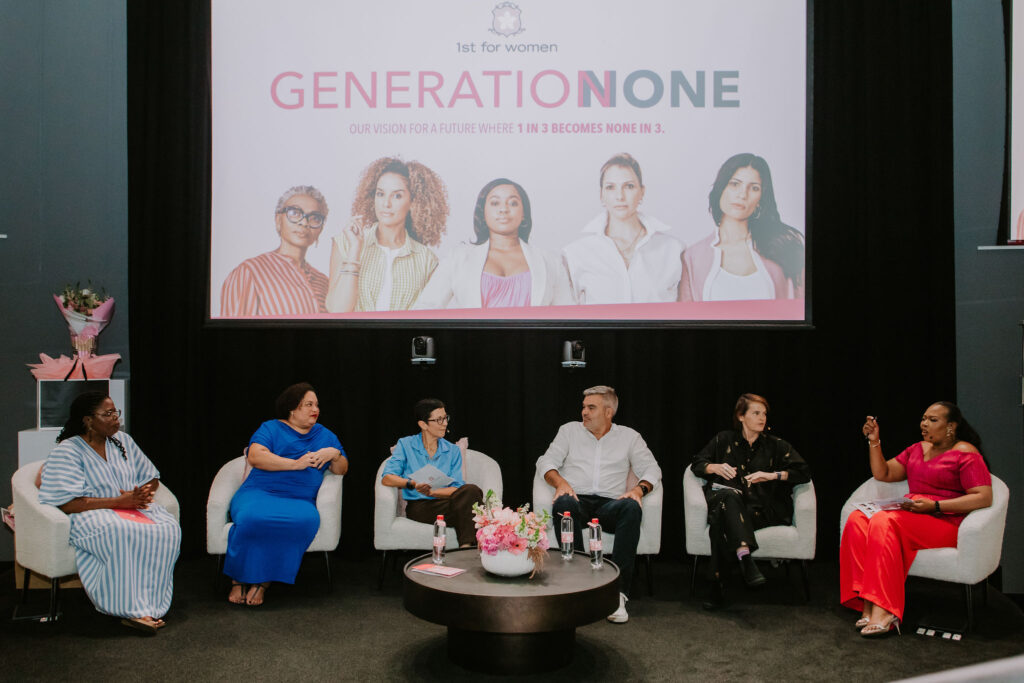
She added that 1 in 3 women in South Africa will experience gender-based violence. The Foundation’s aim, Generation None, is a country where women and children are safe.
What the panel added
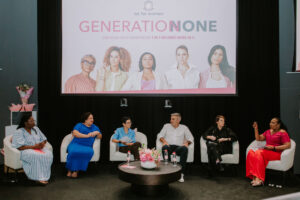
Foundation partners took the stage after the clip. Each one covers a different part of the problem.
Debi Steven is the founder and CEO of Action Breaks Silence. She firmly believes “changing behaviour takes repetition, not just one workshop.”
At the panel, she said she’s a survivor herself, and her team teaches every student in Diepsloot’s schools 35 hours of education on violence against women and girls, from grade 2 through grade 9.
Her ask to funders was to “pump money into prevention.”
Naledi Kuali is Deputy Director of Lawyers Against Abuse, and her stance is that “no survivor should face the justice system alone.”
At the preview she talked about abuse that happens on our phones as well. It’s usually the type of abuse we don’t recognise as “real abuse.” She said unfortunately, technology is “advancing faster than the legal system on average.”
Harassment on WhatsApp or Facebook counts, and she said it can be enough to get a protection order. A screenshot can support the application. Leaking an intimate picture of someone (a form of revenge porn) is a crime.
She also reminded us of the importance to take action when something is disclosed. For example, if a child tells an adult about bullying or harassment, the adult is bound by the law to act.
“It’s not optional,” she said.
Celeste Matross, Country Director of REPSSI South Africa, spoke about how safety equips children from life. “When every circle around a child is safe, that child can build the confidence to cope with whatever comes.”
She works with teachers. A disruptive child may be a child who doesn’t feel safe, she said. One teacher told her team, “now I have the skills to be able to see what’s behind that behavior.”
Questions from the floor
Guests sent in questions through a QR code in the booklet. One guest asked how to create consequences that change behaviour and keep men in the room.
Jaco’s answer straight to the point, not hostages taken. He said consequences “need to cost me something.” He was referring to men. It has to cost men something.
Standing up to the jokes around the fire could mean a man loses his friends. But it could also mean getting up early to stand at a bus stop with other men and make it safe. He explained that “costing men” something looks like meeting a woman on her terms.
Take running, for example. Instead of telling a woman she can run with him, he joins her in her routine. A man who pays a price meets her on her time and on her route. He fits into her life. “We’re gonna come run where you run,” he said.
Another guest, Luyanda, asked what people can do tomorrow. Not next year or next month. Now. Immediately. Seugnette said it is “as easy as speak up.”
Men can tell a friend “we don’t talk about women like that.” Women can support a friend who is going through a hard time.
She also said customers can share the panic button in the First for Women app with five friends or loved ones.
Speaking up is where the cost starts. Seugnette closed the panel by saying, “I do believe there’s more good men than bad men.”
Anele calls the episode “where the conversation starts, not where it ends.”
So here’s my questions for the men. Which joke will you stop laughing at this week? What action will you take against GBV and what will it cost you?
References
First for Women. “Most Men Say They’re Against GBV. The Anele Podcast Asks What They Are Doing About It.” Press release, November 2026.
Kahla, Cheryl. Audio recording of the First for Women preview of The Anele Podcast: Her & Now, including the panel discussion. 24 November 2026. Recording in the author’s possession.
Kahla, Cheryl. Recorded interview with Jaco van Schalkwyk, The Character Company. 24 November 2026. Recording in the author’s possession.