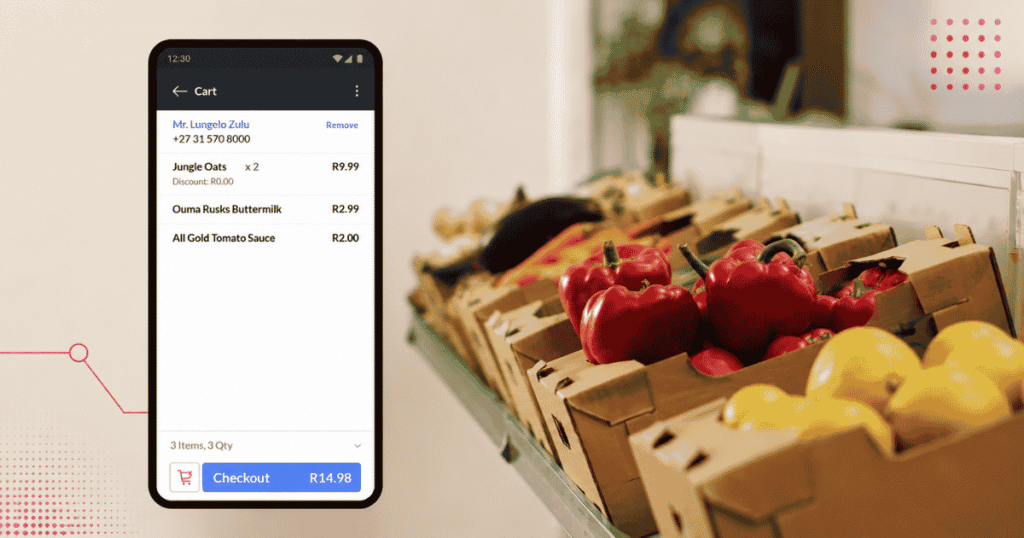

Zoho launched a South African edition of its POS (point-of-sale) software on Wednesday, 30 July 2026, at the company’s annual Zoholics user conference. The product fills what Andrew Bourne, Regional Head for Zoho Southern Africa, described as the last missing piece in the company’s local offering.
Zoho POS is a cloud-based point-of-sale system priced in rands.
Zoho POS pricing and features
The Standard tier costs R120 per location per month, billed annually, excluding VAT. The Professional tier is R240 and the Premium tier is R400, both on the same per-location, per-month, billed-annually basis.
A forever-free edition is also available, along with a 15-day trial on any paid plan.
The software handles billing, inventory, vendor procurement, pricing, loyalty programmes and real-time analytics from a single system.
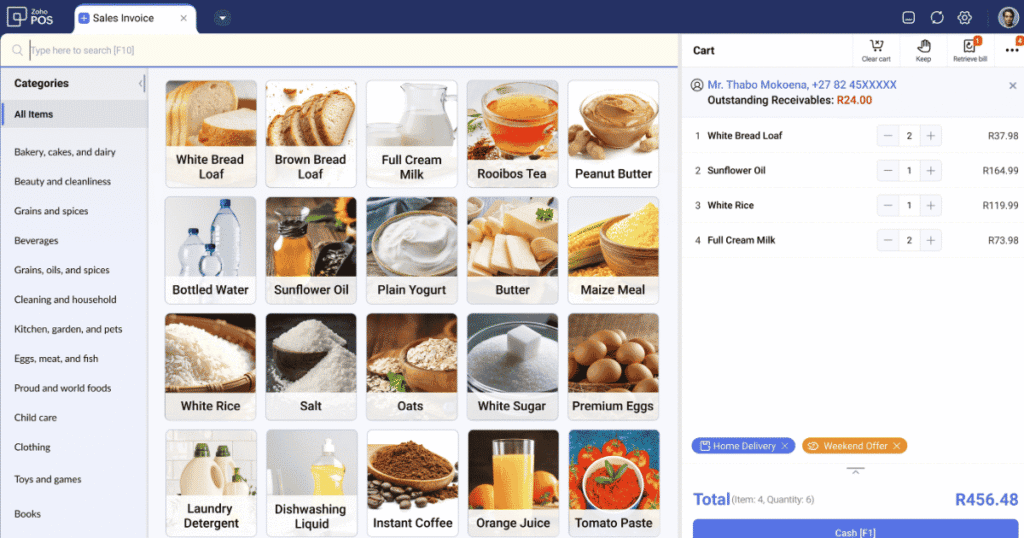
It runs on Windows, iOS and Android, including Android card machine devices, which means a store manager can walk a queue and process payments on a handheld device.
It also operates offline and syncs once connectivity returns, relevant for any South African business that has ever lost a sale to an outage.
VAT compliance is built in. The system automatically applies the correct VAT rate at checkout and reflects it across invoices, receipts and sales reports.
Integrates with Zoho ecosystem
Bourne confirmed the product is fully integrated with Zoho Books South African Edition, and that an e-filing integration with SARS for VAT returns is in progress.
On the hardware side, Zoho has confirmed a card machine integration with Yoco, with Capitec Bank and others in negotiation. The integration works by sending a completed transaction total from the POS directly to the card machine, so the merchant keeps a Capitec merchant account and Zoho handles the software layer.
The POS connects into the broader Zoho ecosystem, including Zoho CRM, Zoho Commerce and Zoho Expense.
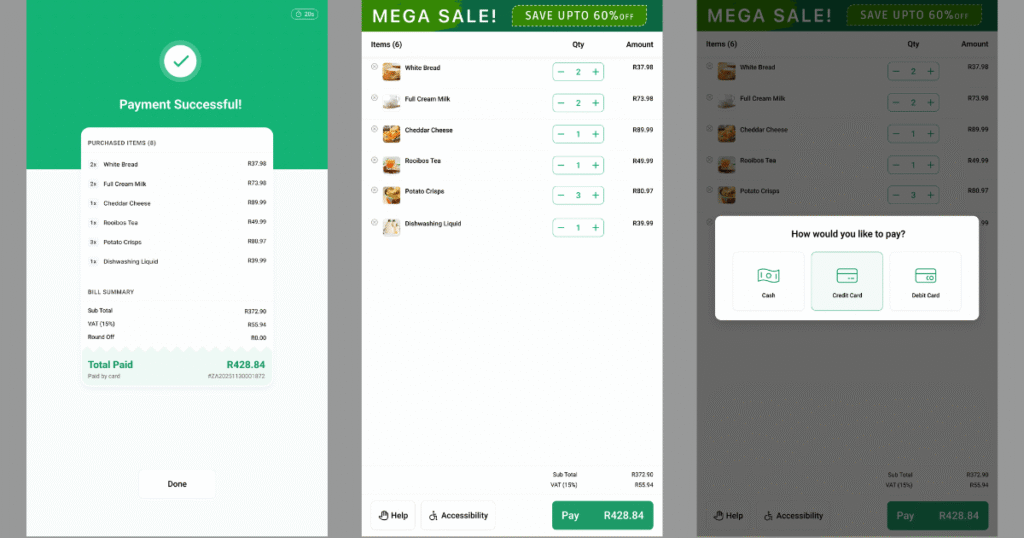
Bourne’s example at the press conference: a customer pays in store, gives a phone number for a competition, that number pushes into Zoho Books, Books pushes into CRM, and the system triggers an SMS confirmation automatically. The whole chain runs without a third-party integration.
How Zoho uses AI
AI sits underneath the analytics layer through Zoho’s proprietary assistant, Zia, which Bourne said has been in development for more than 13 years. Businesses can also connect external large language models via the Zoho MCP, which stands for Model Context Protocol.
Think of it as an adapter that allows tools like Claude or ChatGPT to read and act inside the Zoho environment.
One Zoho partner has already built a voice AI tool that accepts phone calls and instructs the system to create CRM leads, set calendar meetings and send qualification emails.
Growth
Zoho also announced 34% year-over-year revenue growth in the country in 2025, reflecting increasing demand for its business software portfolio among organisations of all sizes.
The growth figures place South Africa inside Zoho’s top 15 global revenue markets, which together account for 80% of the company’s total revenue. Bourne said South Africa sits at position 12 within that group currently and is on track to move up this year.
Zoho Corporation itself is a bootstrapped, profitable business.
Actual revenue crossed the one-billion-dollar mark, not a valuation milestone. It has more than 150 million users across more than 150 countries and employs over 19,000 people globally.
Possible SA data centre?
A South African data centre is the next item on Bourne’s list.
ALSO READ: Inside Nathu La: Zoho’s five-year bet on owning its own hardware
He confirmed that the company has toured Teraco facilities and is in discussions with local co-location providers, with the plan to rent rack space and install Zoho’s own servers and monitoring equipment.
Zoho global CEO Shailesh Kumar Davey has, according to Bourne, already earmarked South Africa as a priority site. No timeline was given, partly because data centre costs have risen sharply, by three to four times Zoho’s earlier estimates.
Zoho POS is available now.