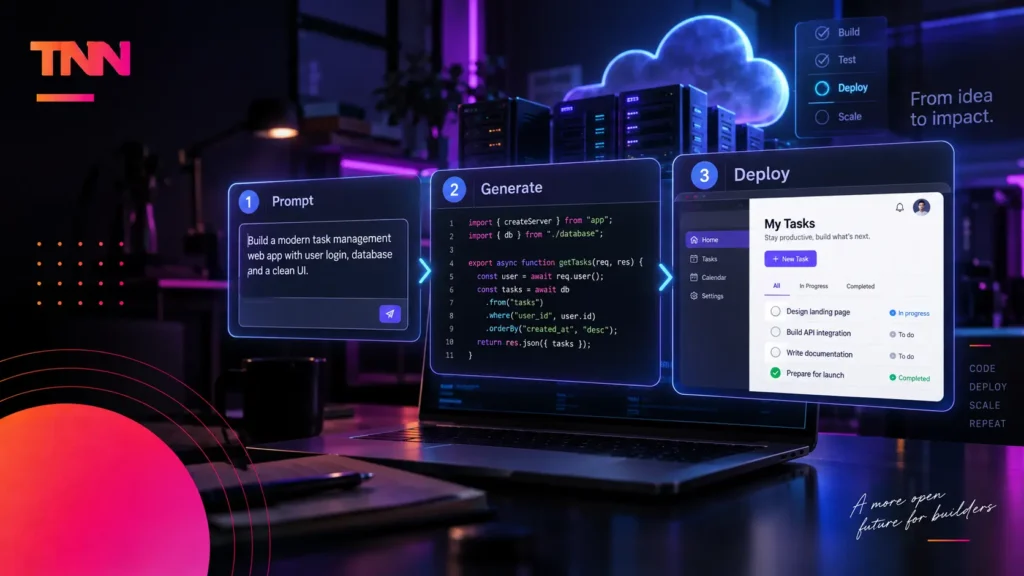

Zoho has announced a series of updates to Catalyst, its Platform-as-a-Service (PaaS) offering. The changes include new AI agent development tools to help developers turn AI-generated code it into applications they can actually deploy and use.
The platform now integrates with Anthropic’s Claude Code and OpenAI’s Codex, and introduces support for the Model Context Protocol (MCP), a non-interactive command-line interface (CLI), and a feature called Agent Skills.
Zoho is also making Catalyst completely free for students building non-commercial applications, with no subscription or credit card required.
The actual problem Catalyst is trying to solve
AI coding assistants can generate code quickly. Very quickly. The hard part comes when that code has to make its way into a working production environment without a developer having to manually stitch together cloud services and deployment workflows.
According to Andrew Bourne, Regional Head of Zoho South Africa, developers are still spending significant time managing infrastructure even after the code itself is done.
“With Catalyst, we are reducing that friction by providing an agent-ready, serverless full-stack platform that helps developers build, deploy and scale intelligent applications with greater control and less operational overhead,” Bourne said.
Catalyst’s approach is to give AI coding assistants a structured set of tools and context, so they’re not guessing how the platform works or selecting the wrong deployment path.
What Agent Skills and MCP actually do
Agent Skills is a feature that gives AI coding assistants context about Catalyst’s services, architecture and recommended development patterns. The goal is to reduce incorrect outputs by guiding the assistant toward verified workflows rather than leaving it to infer how the platform should be used.
The non-interactive CLI allows AI coding assistants to run multi-step workflows, from coding through to deployment, without requiring human confirmation at every stage. Less hand-holding, faster shipping.
The Catalyst MCP server gives AI assistants direct access to Catalyst capabilities from within tools developers are already using, including VS Code, Claude Code and Cursor. Tasks like creating a database table or adding a column can be done without switching to a separate console.
Orchestration built into Agent Skills then routes requests through the appropriate CLI or MCP path, reducing the risk of the wrong tool being called.
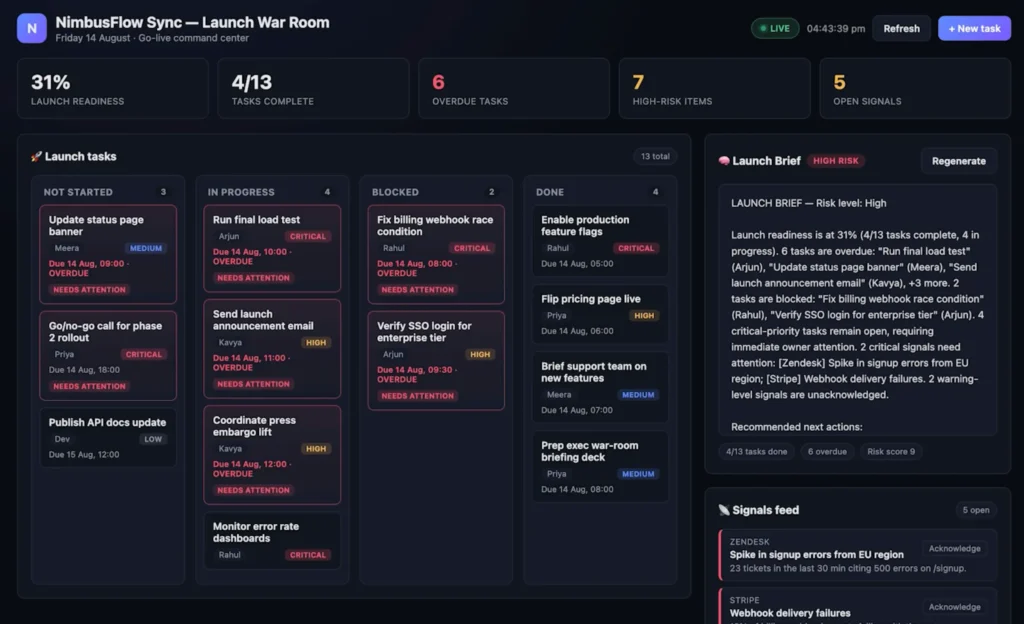
Zoho is also open-sourcing the AI skills repository, its Software Development Kit, its CLI and a lightweight Javascript framework called Slyte, giving developers the ability to inspect and extend what’s there.
Governance: humans still have the override
As AI agents take on more of the development process, Catalyst keeps development and production environments separate. Code can only be moved to production manually, so an AI agent cannot push changes directly to a live application.
Developers can control what each person or AI agent is allowed to do within a project, while audit trails record application logs, platform logs and MCP tool calls. This makes it possible to see what an AI agent did and when.
Any changes made after launch are versioned, so developers can trace them back to their source or roll them back if needed. Catalyst applications run in Zoho’s own data centres and use its existing security infrastructure, including DDoS protection, SOC compliance, and regular vulnerability assessments and penetration testing.
Free access for students, with a practical ceiling
Catalyst offers a monthly free tier for all developers, plus R3,500 in free credits over a six-month period for those wanting to go further. A pay-as-you-go model is available, with per-unit costs rather than layered licence fees, and a subscription option exists for teams that prefer predictable billing.
For students, Catalyst is fully free for non-commercial applications, with no credit card required and access to full-stack hosting, functions, database and AI tooling.
“By removing the cost barrier and giving students access to full-stack development and AI capabilities, we want to enable them to experiment, build practical skills and turn their ideas into working applications,” Bourne said.
That free tier, if it delivers what Zoho says, is a meaningful on-ramp for students who currently hit a paywall the moment they try to move a project beyond their laptop.