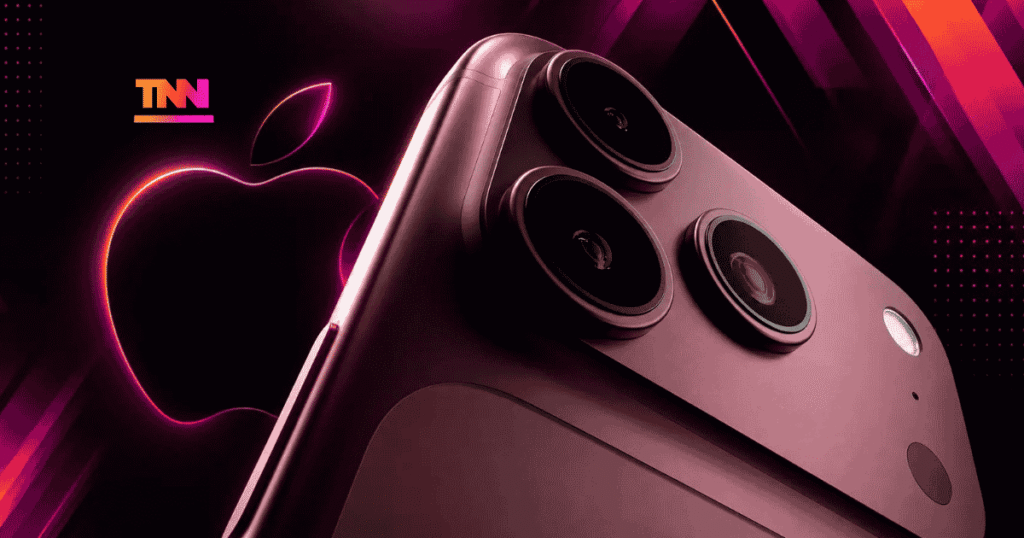

I got some of the Moov D3O goo that protects the iPhone 18 Pro on my hand. Then I hit it with a hammer. So that might give you an idea of how this device is protected against slips and falls.
And it’s a good place to start before we get into the chip architecture. The O in D3O stands for ‘orange’, by the way.
iPhone 18 Pro series launches in SA
The iPhone 18 Pro and iPhone 18 Pro Max went on sale at iStore South Africa on 18 September 2026, with price tags starting from R28 799. You can also trade in your old for a price drop, or get it on contract. More details below.
The launch was fun, the food was excellent and the whole thing was well put together. No complaints from this corner. Honestly, a pretty good way to spend an afternoon.
What I actually want to focus on, though, is the technology inside the phone that helps protect it from impact and vibration.
Ready?
The goo that stops an F1 car shaking itself apart
MOOV, the case and screen guard brand available at iStore, has built its iPhone 18 Pro protection range using D3O technology.[1] D3O is describes itself as a leading supplier of impact protection and anti-vibration materials, with its technology used by Formula 1 teams and NASA, among others.[2].
D3O is a non-Newtonian material, which basically means it behaves differently depending on how much force is applied to it. At rest, it is soft and flexible. Hit it suddenly, though, and the material stiffens as it absorbs and spreads the energy.
Hammer test, anyone?
D3O has more than 50 different formulations, including materials designed specifically to deal with vibration. Some have been used in Formula 1 car chassis to help reduce the effects of road vibration on drivers.[3]
The same basic idea applies to a phone case: instead of letting the force from a drop travel straight through to the glass and internal components, the material helps absorb it.
The chip: 2nm, and what that actually means
The A20 Pro is Apple’s first iPhone chip and it is built on a 2-nanometer manufacturing process[4]. The 2-nanometer figure here refers to the size of the transistors etched onto the silicon. Smaller transistors mean more of them can be packed into the same space, and they switch on and off using less energy.
The A20 Pro combines a 6-core CPU, 7-core GPU and Dual 16-core Neural Engine, with 32 Neural Engine cores in total. Apple says the CPU is up to 20% faster than the A19 Pro, while graphics performance is up to 40% faster.
Very technical terms that actually just means What this actually the iPhone 18 Pro series has more processing power for things like gaming, photography and AI, so demanding tasks can run faster and more smoothly.
The A20 Pro also has a new Dual 16-core Neural Engine, which Apple says delivers twice the AI processing power of the A19 Pro. That gives the iPhone 18 Pro more muscle for on-device AI and computational photography.
How Apple keeps that chip from throttling
A fast chip is only useful if it can keep running at that speed. Once a processor gets too hot, it has to slow itself down. That is why sustained performance matters more than a peak benchmark score.
Apple has redesigned the iPhone 18 Pro’s thermal system to deal with that heat.
The new vapour chamber has three times the surface area of the one in the iPhone 17 Pro, giving it more room to spread and dissipate heat. When the A20 Pro heats up, the liquid near the chip evaporates. That vapour spreads through the chamber toward cooler areas, where it condenses back into water and releases the heat.
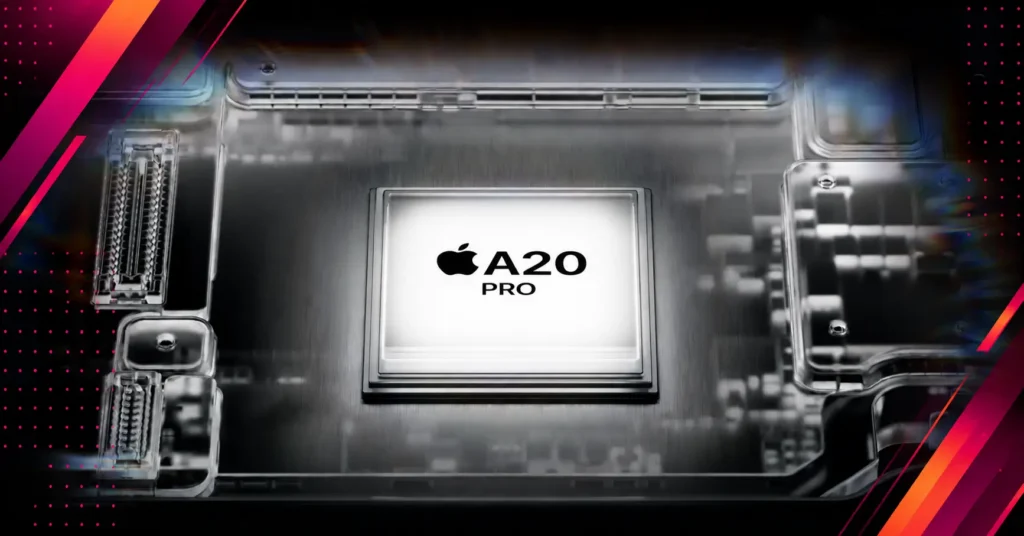
The result, according to Apple, is up to 40% better sustained performance than the iPhone 17 Pro. In other words, the A20 Pro runs very fast and the new cooling system is designed to help it stay fast for longer when you’re gaming or using AI models. Or pretty much any other intensive tasks
The camera: a mechanical aperture for the first time
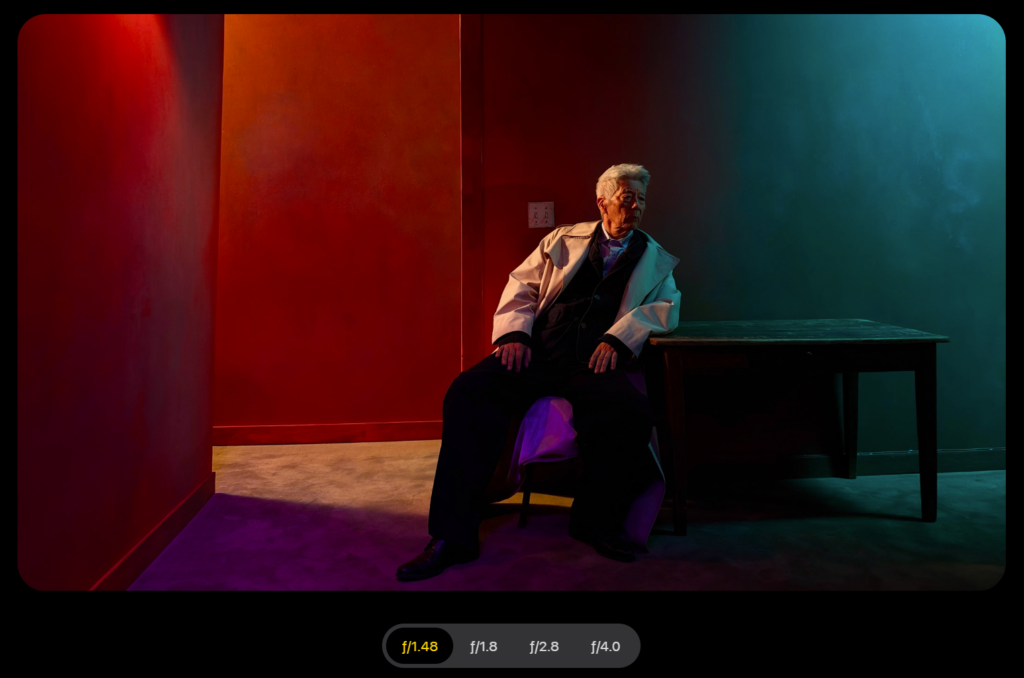
Until now, the iPhone’s main camera has used a fixed aperture. The iPhone 18 Pro changes that with a variable aperture on its 48MP Fusion Main camera, using six laser-cut blades that physically move between four settings: ƒ/1.48, ƒ/1.8, ƒ/2.8 and ƒ/4.0.
The phone can adjust the aperture automatically depending on the lighting and depth of field, or you can control it manually in the Camera app.
At ƒ/1.48, the aperture opens wider and lets in more light. Apple says this gives the iPhone 18 Pro around 50% better low-light performance than the previous fixed-aperture system, which can also mean shorter exposures and less motion blur in darker conditions.
At ƒ/4, the opening is smaller, giving you more depth of field. In simple terms, more of the scene can stay sharp, which is useful when you’re shooting something like a landscape or a group of people.
The important bit is that this is happening with the lens itself. The iPhone isn’t relying entirely on software to decide how much light gets through or how much of the scene stays in focus. And because you can control the aperture manually, you have more say over how the photo looks.

ALSO READ: Japan’s new internet speed? 4 million times faster than the US
The modems: Apple’s own silicon takes over
The iPhone 18 Pro comes with Apple’s custom-designed C2 cellular modem. Apple says it uses 15% less energy than the previous-generation C1X, while also delivering faster uploads and AI-powered improvements to cellular reliability. It supports both sub-6GHz and mmWave 5G.[4]
So basically, the modem is the bit of the phone responsible for talking to your mobile network. It handles the connection that lets you make calls, send messages and use mobile data when you’re away from Wi-Fi.
Then there’s the N1, Apple’s wireless networking chip. It handles the phone’s Wi-Fi 7, Bluetooth 6 and Thread connections, so there is a separate piece of Apple silicon dealing with your local wireless connections.
There is one regional wrinkle, though. The iPhone 18 Pro Max sold in the US uses Qualcomm’s Snapdragon X80 modem instead of the C2. A teardown by TechInsights confirmed the Qualcomm hardware.[5] Outside the US, Apple’s specifications list the C2 for the Pro Max as well.
Battery: up to 45 hours of video playback
Apple rates the iPhone 18 Pro for up to 36 hours of video playback, while the Pro Max stretches that to 45 hours. Typical use is rated at up to 24 hours on the Pro and 30 hours on the Pro Max. These figures apply to the eSIM-only models, which have larger batteries because there is no physical SIM tray taking up space.
For models with a physical SIM tray, Apple says battery life is around two hours shorter for video playback.
Charging has also been sped up. The iPhone 18 Pro can reach 50% in around 15 minutes using a 60W-capable power adapter with Adjustable Voltage Supply (AVS) and a USB-C charging cable. The adapter (obviously) is sold separately.
How much does the iPhone 18 Pro cost in SA?
If you’re thinking about upgrading, here’s what the iPhone 18 Pro range will set you back at iStore:
- iPhone 18 Pro 256GB: R28 799
- iPhone 18 Pro 512GB: R33 699
- iPhone 18 Pro Max 256GB: R31 299
- iPhone 18 Pro Max 512GB: R35 999
Those are the cash prices. For trade-ins:
- Trade in an iPhone 17 Pro 256GB and the 18 Pro 256GB comes down to R11 699.
- With an iPhone 16 Pro 256GB trade-in, you can get it down to R14 999.
- Trade-in values are subject to a final physical assessment.
All new iPhones bought at iStore also come with free iCarePlus, which includes an extended warranty and screen repair.
If you’d rather pay monthly, contracts across Vodacom, MTN, Telkom and Cell C start from R1 119 per month for the iPhone 18 Pro 256GB on a 36-month term.
Sources:
[1] MOOV. D3O Partnership: Protection Engineered for the Extreme. Product briefing document shared with media at the launch event, Sept. 18, 2026.
[2] Fast Bikes Magazine. Collaboration Begins a New Era in Protection. fastbikesmag.com, July 16, 2025.
[3] D3O. Vibration Damping. d3o.com, 2026.
[4] Apple Inc. iPhone 18 Pro and iPhone 18 Pro Max. apple.com, Sept. 2026.
[5] TechInsights. Apple iPhone 18 Pro Max, uncovered: A20 Pro, Qualcomm X80, Apple N1, and New mmWave Hardware. techinsights.com, Sept. 18, 2026.