
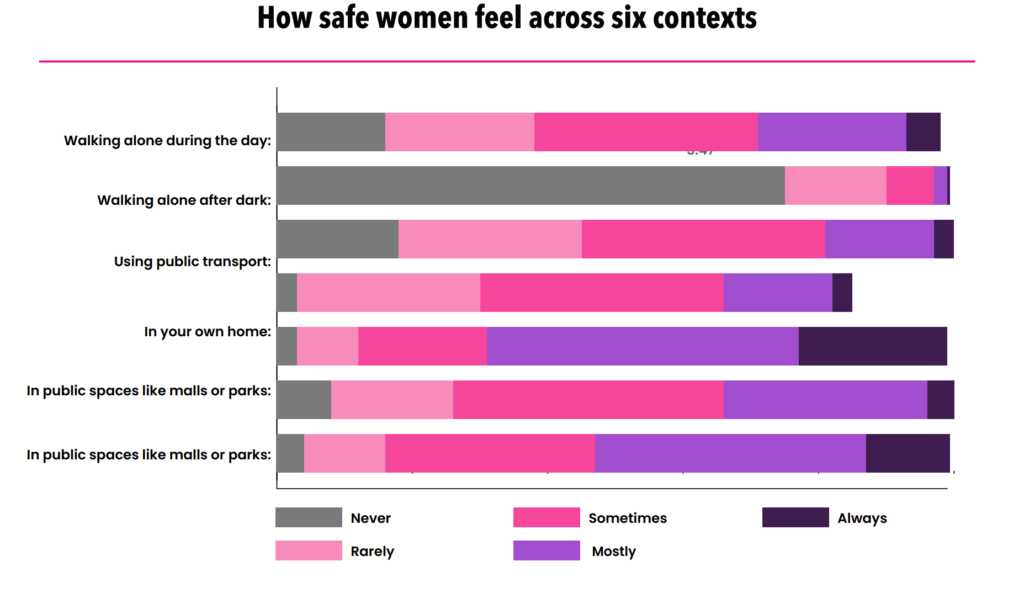
A statistic that surprises no woman in the history of forever, and one that deserves to be taken seriously every time it appears in the data: 90% of South African women say they never or rarely feel safe walking alone after dark.
The figure comes from the second edition of the Her & Now report, released by 1st for Women.[1]
The report draws on 6,558 completed survey responses gathered since 2025, making it the largest dataset the Her & Now programme has produced.
Her & Now report, Edition 2
Where last year’s edition asked South African women how they were feeling, this one asked why.
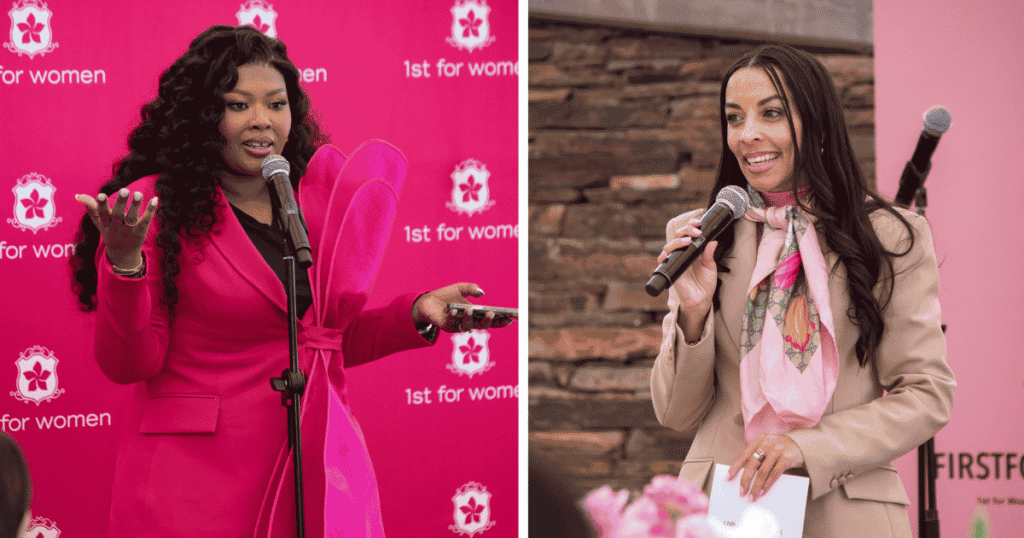
Dr Reitumetse Mpholle, Senior Manager of Insights and Research Initiatives at 1st for Women, opened the launch by saying: “We’re not here to celebrate women’s resilience. We’re tired of being labelled resilient, because it forces us to keep coping even on the days we’re not okay.”
She said the report’s central conclusion is that “we need to redesign the reality women live in.”[2]
Where women feel most overlooked
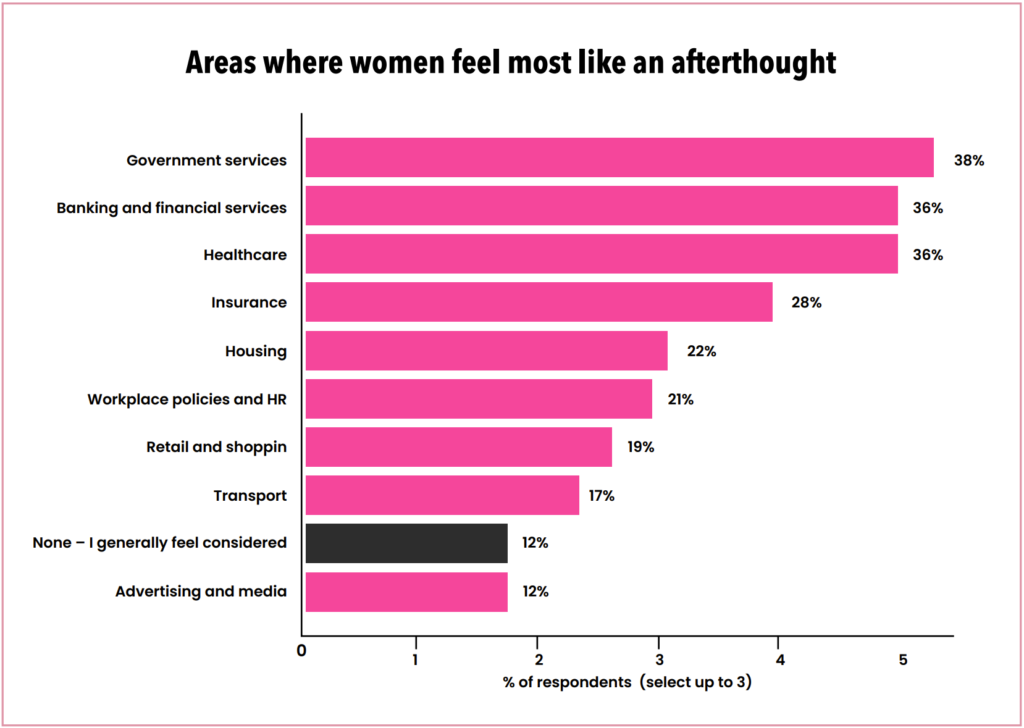
Thirty-eight percent of respondents named government services as the sector where they feel most like an afterthought, followed by banking and healthcare, both at 35.6%. Only 11.5% said they generally feel considered by the systems around them.
Government, are you listening?
Asked where they feel completely seen, respondents consistently named the local hairdresser and the neighbourhood spaza shop. Not really for scale or technology but for knowing a name, a school run, a tight month, without being asked twice.
Basically, women seeing each other.
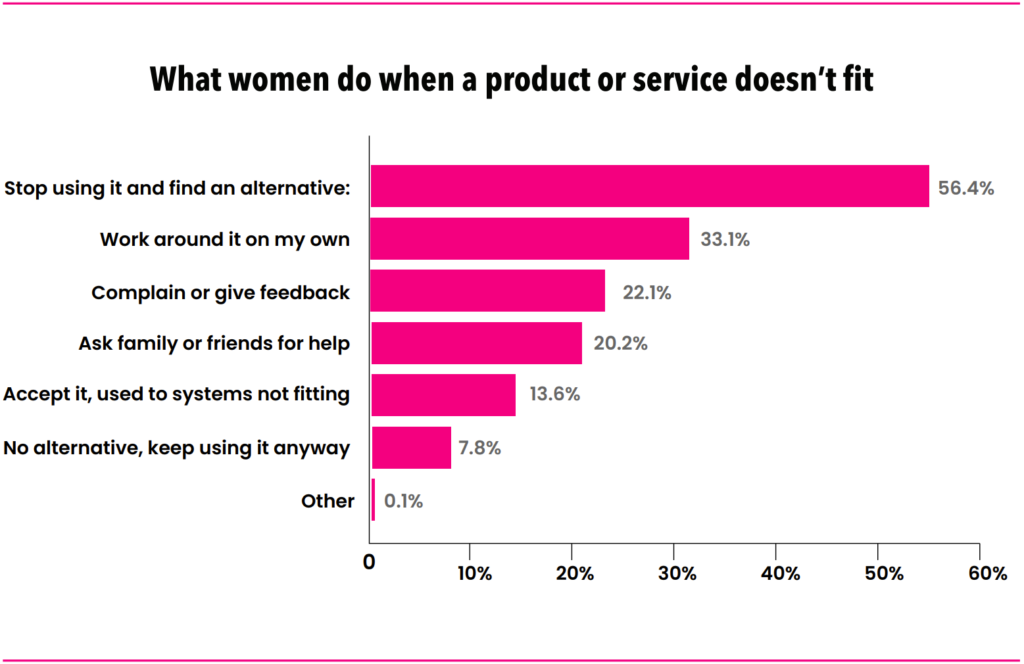
When a product or service doesn’t work, 56.4% of respondents stop using it and find an alternative, and a further 33.1% work around the problem on their own. Single parents are the group least able to switch, with 9.5% saying they have no alternative and simply keep using a service that doesn’t fit, against 7.8% overall.
The safety tax
After dark, the rural-urban differences that shape daytime safety scores collapse almost entirely.
- Among women in rural villages and on farms, 86.2% say they never or rarely feel safe walking alone at night.
- In urban centres, that figure climbs to 93.3%.
Women in wealthier, better-lit suburbs consistently report feeling less safe than women in rural villages, where tighter community networks fill the gap formal systems leave open.
This fear doesn’t come for free, because we already can’t have nice things – 79.5% of women say safety concerns have cost them money, whether through Uber instead of walking, paid parking, or home security.
Among women earning R50,000 or more per month, 32.8% say safety adds more than R1,000 to their monthly expenses.
Among women earning under R5,000, only 7.1% reach that threshold, but 84.4% say it costs them regularly, and they track every cent of it.
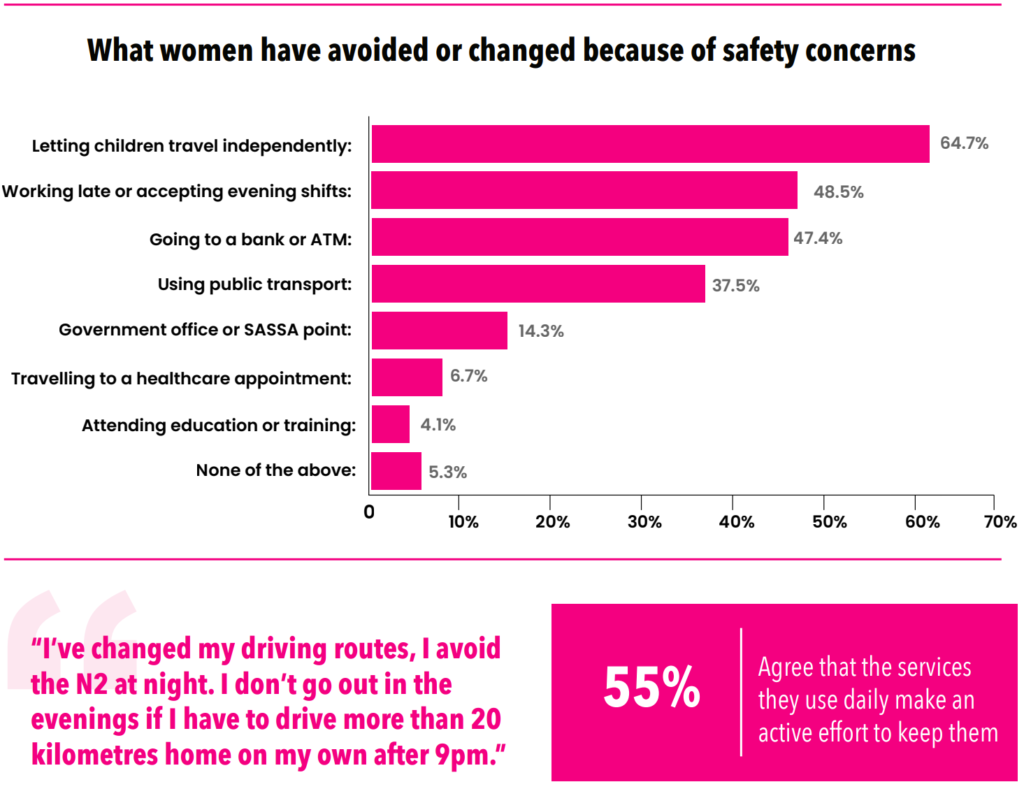
What is most heartbreaking is that 64.7% of women have stopped letting their children travel independently because of safety concerns, a figure that rises to 82.9% in informal settlements.
ALSO READ: Africa’s water crisis steals 40 billion hours from women and girls every year
Money and the payslip problem
Nearly a third of women surveyed (32.8%) say they often run short before the end of the month, and 15.7% describe themselves as in debt and struggling to keep up. Only 14.7% say they are comfortable with some savings.
In the last twelve months, financial pressure pushed 47.9% of women to borrow from family or friends, and 28.1% to go without food or reduce meals. Single parents are considerably more exposed: 55.4% borrowed from family or friends in the same period, compared with 47.9% overall.
The single most repeated request across hundreds of open survey responses was for credit and savings products that assess affordability on real cash flow, with repayment dates that move with actual pay days rather than penalising a woman for money that arrives three days late.
The stokvel, in every variation imaginable, is what fills the gap in the meantime.
When asked how well banks accommodate income that changes month to month, only 11.8% of all women said very well. Among women with irregular income, 46% said poorly or not at all.
Banks, are you listening?
ALSO READ: Burnout is out! Here’s why SA women choose softness over struggle
The invisible hours
More than a third of women surveyed (36%) spend five hours or more a day on unpaid domestic and care work. Among mothers of children under five, that rises to 48.4%. A whopping 19.4% of those women spend more than eight hours a day on unpaid work alone. For mahala!
Even where a partner is present, 75.8% of women say they still handle cooking and cleaning largely alone, and 69.2% say the same of laundry.
A partner’s income changes how the financial burden is shared. It does far less to change who keeps the household running. This is a conversation the men still don’t want to have.
This is true: 77.3% of women agree that neither government nor business has any real idea how much time and money their unpaid work actually saves or costs.
ALSO READ: I played golf with other business women. The golf was the easy part
Who women trust
Only 9.2% of women mostly or completely trust government and public services. Over a third (34.1%) do not trust them at all. Not even a sliver. Government, take notes of this too.
The number that lands hardest is the one running the other direction: 39.3% of women mostly or completely trust the other women in their personal network, and that figure holds steady across income brackets and community types.
Eighty-four percent believe meaningful change will come from women themselves rather than from institutions.
The Anele Podcast: Her & Now
At the event, Anele Mgudlwa also announced the second season of The Anele Podcast: Her & Now. Speaking about the report and the podcast, she said: “I read the numbers in that first report, and then I sat across from women who had a lived experience of every one of them. Something shifts when a stranger says the exact thing you have been carrying alone.”[3]
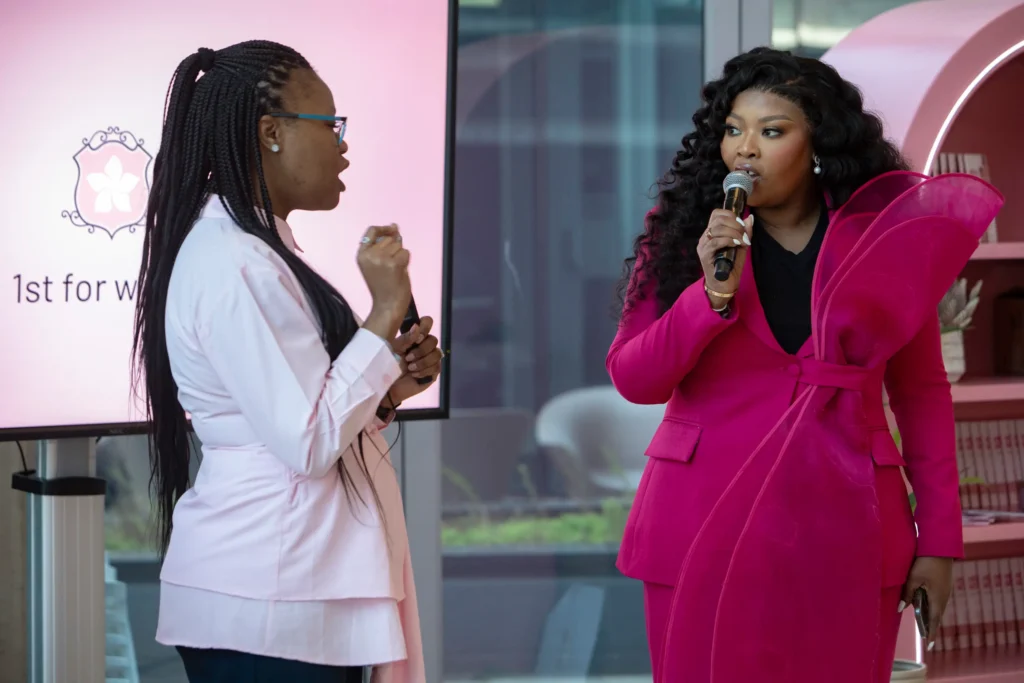
Season two of the podcast launches in September 2026 on Apple Podcasts, Spotify, and the 1st for Women YouTube channel.
“Everything we build at First for Women starts with a question. What does safety actually mean for the woman living this specific life?” said Jill Mulligan, Senior Manager at 1st for Women Insurance.[3]
“We cannot cover a woman properly, or protect her, without first understanding her days in detail, the risks she navigates and the load she carries quietly.”
The full Her & Now Edition 2 report is available online.
Sources:
[1] 1st for Women Insurance. “Her & Now Edition 2: A World Built for Someone Else.” 1st for Women, Aug. 13, 2026.
[2] Press release: “A World Built for Someone Else: First for Women’s Her & Now Report Reveals the Toll Carried by South African Women.” 1st for Women Insurance, Aug. 13, 2026.
[3] Mgudlwa, Anele. On-stage conversation, Her & Now Edition 2 launch event, Johannesburg, Aug. 13, 2026.