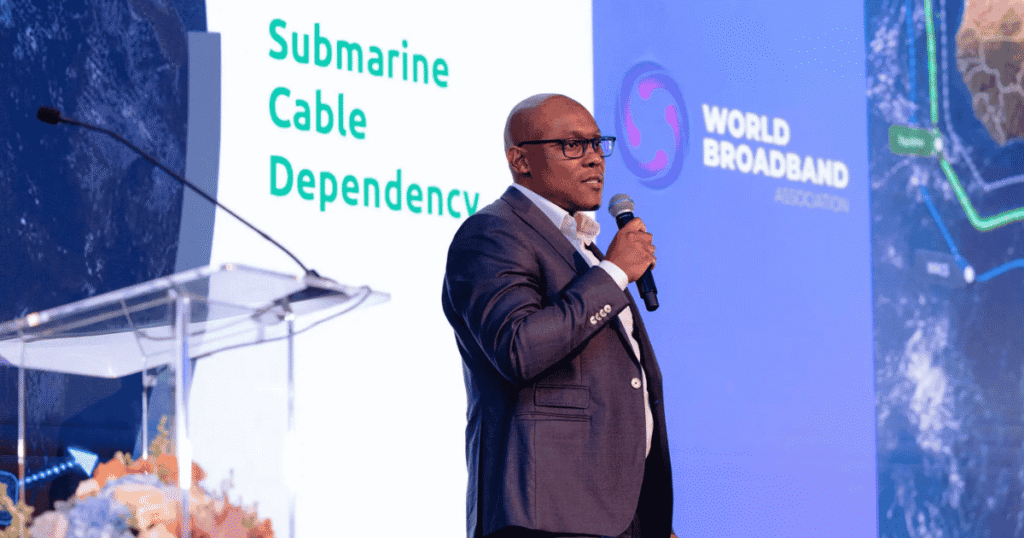

Openserve has built fibre routes to South Africa’s neighbours. When Amu Maja described those routes at the World Broadband Association’s BDC Africa 2026 conference in Cape Town on 16 November, he specifically wanted to talk about was where they stopped.
“Our story also ends at the border,” he said. Where one operator hands capacity over to another, in what Maja called “no man’s land”. His asked why should two operators meet at a frontier to patch their networks together when they could carry the traffic farther and hand it over inside a data centre?
Before a business can make use of computing capacity in another country, it needs a reliable connection to it. A new data centre does little to improve that connection if the route between the two is still the weak link.
What happens when a cable goes down?
Subsea cables connect Africa to the rest of the world, but they also carry traffic between African countries.
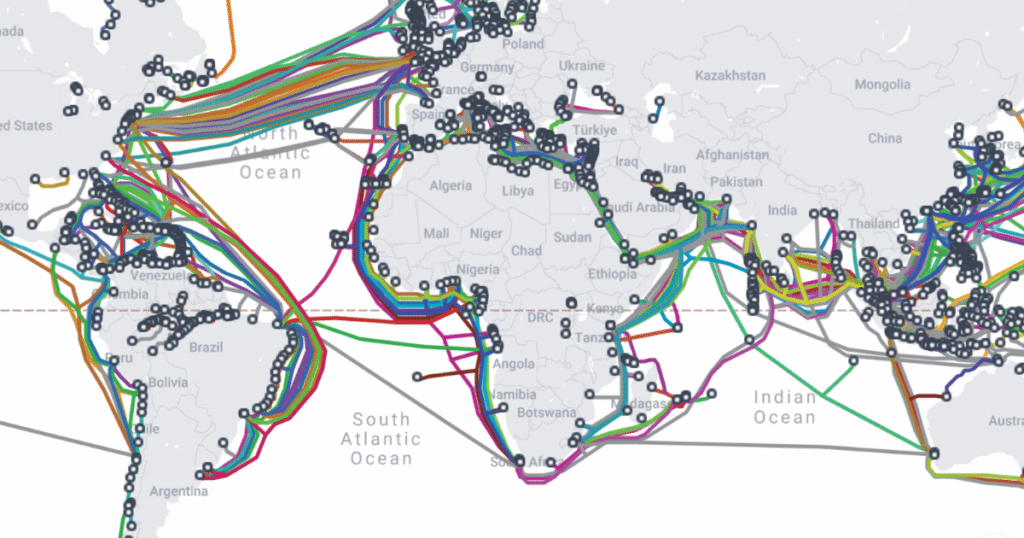
Maja, Openserve’s Executive Carrier & Global Business Development at Openserve, pointed to Cape Town and Lagos as an example of cities that depend on a cable off the west coast to connect.
For landlocked countries, the problem starts farther inland because they depend on cross-border links to reach the cables in the first place. If there is only one route, a cut can take that connection out.
Maja was arguing for more ways to get traffic from one place to another when a cable fails. Which could mean connecting the fibre networks already built on land or adding routes where they are missing, and deciding where operators should hand traffic over.
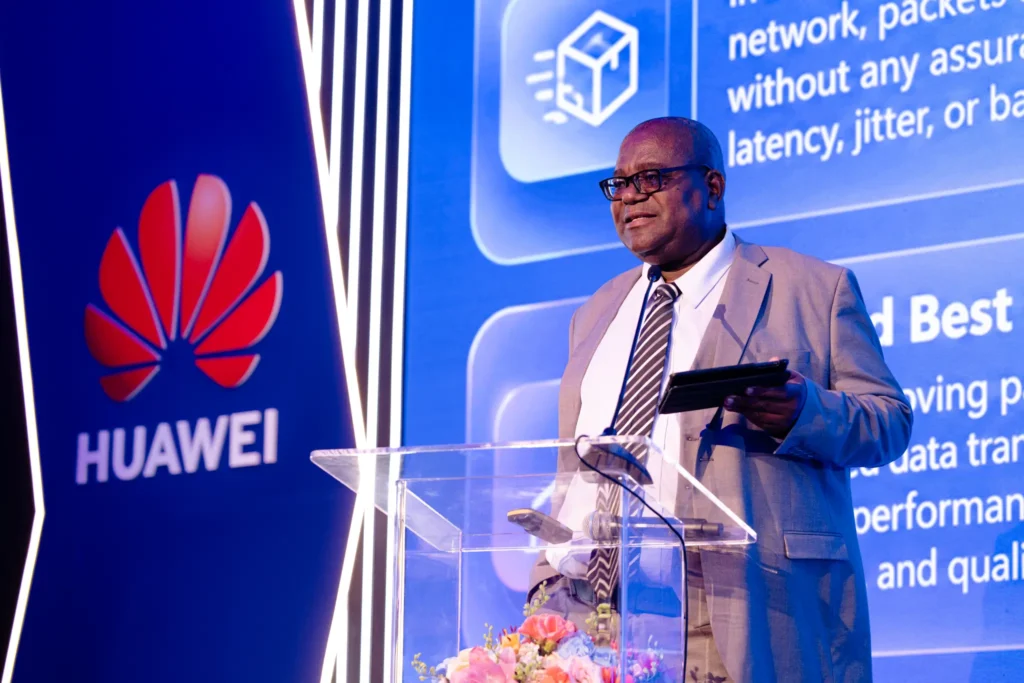
Operators can have fibre across a border and still send traffic by sea. Jacob Munodawafa of the Southern Africa Telecommunications Association said traffic between South Africa and Tanzania should go overland through Mozambique when there’s enough capacity, rather than defaulting to a subsea route.
Two ways to close the gaps
Meanwhile, Kenya is trying to get private operators to build missing links. Washington Okoth, from the country’s State Department for ICT and the Digital Economy, said Kenya had identified gaps in both its national backbone and its cross-border connections.
It invited companies to bid for the work through a World Bank pilot. He said the bidding closed on 28 October, and the project is a test of whether public subsidies can make routes worth building where the commercial case alone hasn’t been enough.
In Tanzania, the national backbone already reaches about 125 of the country’s 139 districts, according to TTCL director-general Moremi Marwa. He said the operator expected to reach all 139 by December 2026. It was already connected to six of Tanzania’s eight neighbours and aimed to give all eight access to Indian Ocean cable routes through its network by April 2027.
TTCL has taken fibre to the top of Kilimanjaro, Marwa said. For Tanzania’s landlocked neighbours, a reliable connection to the coast means having another route available if a cable is cut.
What the connection is for
In his opening remarks, Openserve’s Sunil Piyarlall pictured a Saturday morning in Gauteng.
A learner asks an AI tutor to explain fractions again. Her mother uses an isiZulu voice assistant to check a clinic appointment. Neither is thinking about where the model runs or how long the request takes to reach a data centre. They want an answer they can use, in their own language, at a price that makes sense.
Cassava Technologies’ Ziaad Suleman argued that African users cannot rely entirely on models built elsewhere to understand their languages and circumstances. Better links can make computing capacity easier to reach. They don’t, on their own, make the answer more useful to the person asking.
The congress also saw the launch of ION-2030, an international initiative to develop a framework for future optical networks, including those serving AI and data centres.

Common standards can help operators design networks that work together. The decisions Maja was talking about are more specific: where the traffic changes hands, who carries it from there and which route is available when a cable breaks.
Those are the decisions that determine whether two data centres in neighbouring countries are neighbours in any useful sense.