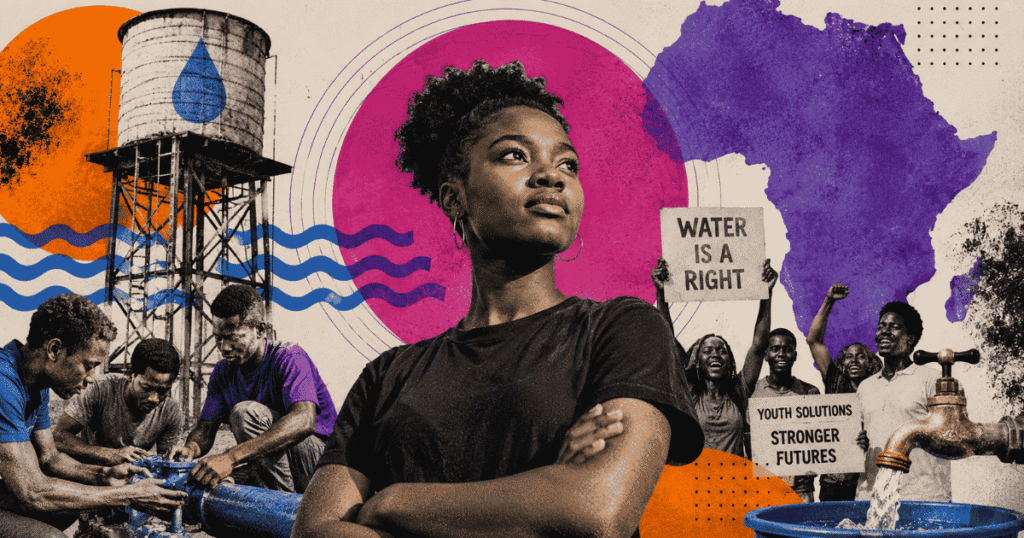

Africa’s water and sanitation crisis has solutions, and many of them are already being built by the continent’s youngest citizens. At the Africa Day 2026 webinar on water security and sustainable development, Gracious Nyathi made a case for youth participation.
The webinar aligned with the African Union’s 2026 theme, Assuring Sustainable Water Availability and Safe Sanitation Systems, and addressed one of Africa’s most persistent challenges.
This article is based on a presentation by Gracious Nyathi, Program Management, Communication and Policy practitioner at the Mandela Institute for Development Studies (MINDS Africa), at the Securing Water, Ensuring Sanitation, and Advancing Inclusive and Sustainable Development webinar, hosted on 26 May 2026.
Africa’s water crisis
The problem runs way deeper than infrastructure. Because in 2026, access to clean water and sanitation is still out of reach for millions of people. Rural communities bear the sharpest end of that gap.
And then climate change compounds the problem. Droughts, floods, changing weather patterns are threatening water sources and the infrastructure built to support them.
Another pressure point is rapid urbanisation. As cities grow faster than their systems can keep up, informal settlements face even bigger sanitation risks.
These conditions impact women and girls disproportionately more, with poor sanitation creating direct health risks.
Daily work of water collection also falls largely on women and girls, stealing billions of hours every year. Hours that could be spent on going to school or starting businesses.
READ MORE: Africa’s water crisis steals 40 billion hours from women and girls every year
Water access is a rights issue
Nyathi framed the challenge clearly: Access to water and sanitation is a fundamental human right, tied directly to dignity and health.
Some of the reasons why:
- Proper sanitation reduces waterborne diseases.
- Improved water access supports community wellbeing.
- Better sanitation infrastructure improves safety and privacy for women and girls.
- Water access is one of the more direct levers for advancing gender equality.
Without resilient infrastructure, droughts and rising temperatures will continue to erode what has already been built.
Where young people come in
Africa’s youth represent a resource that water governance has consistently underused: fresh perspectives and technological expertise.
Nyathi said the youth has the kind of on-the-ground creativity that top-down policy struggles to replicate.
Furthermore, grassroot initiatives are designed by the very communities that need them; that’s why they work. Plus, youth-led initiatives tend to be more inclusive and more sustainable in the long run.
Young people are also drivers of awareness and advocacy. When they are included in policymaking, the policies that come out actually reflect the realities people are living.
What needs to change
We need concrete commitments, and this includes investment in education and support for youth-led innovation.
Inclusive policies, built with young voices rather than just for them, come next. That means creating real platforms for youth participation at local, national, and regional levels.
In her closing argument, Nyathi said investing in youth-led, community-based approaches is investing in a water future that actually holds.