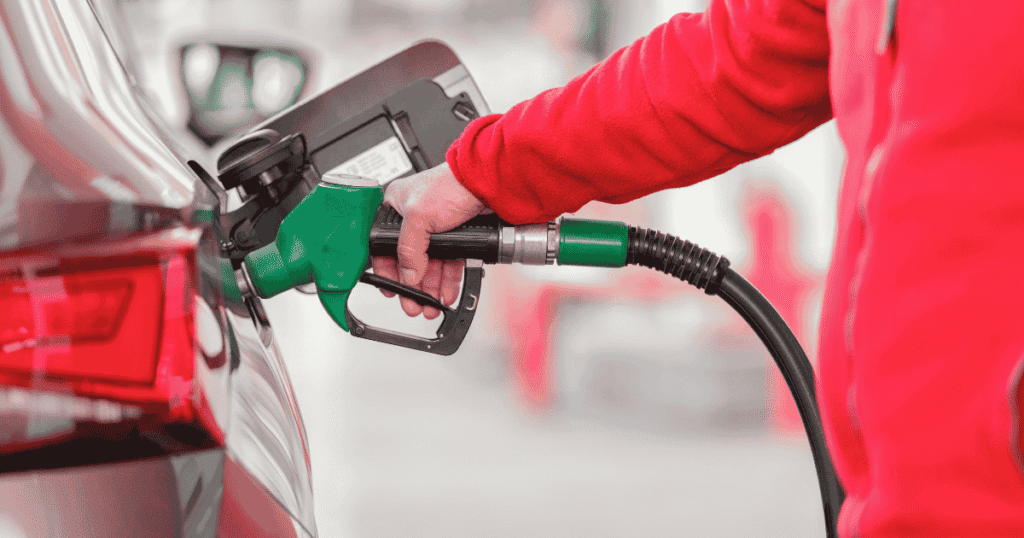

April 1st is usually reserved for pranks, but for South African motorists, the looming fuel price – influenced by the current oil price crisis – is more like a national disaster.
As Brent Crude surges past $100 a barrel, South Africa is bracing for what would likely be the highest single-month fuel price increase in our history.
April 2026 fuel and oil price projections
Petrol 95 is expected to climb by over R5.00 per litre, while Diesel (which is vital for SA’s logistics and food supply chains) could increase by R9.00 or more.
These are the figures released by the Central Energy Fund (CEF):
| Fuel Type | Current Price (March Inland) | Expected Increase | Projected Price (April) |
| 95 Petrol | R20.30/l | R5.62 | ~ R25.92/l |
| 93 Petrol | R20.19/l | R5.07 | ~ R25.26/l |
| 0.005% Diesel | R18.60/l (wholesale) | R9.51 | ~ R28.11/l |
Earlier projects of R8 for a diesel increase have now been impacted by the R/$ exchange rate, the US and Israel-backed war on Iran, and South Africa’s tax and tariff hikes.
Petrol price factors
International product prices are largely responsible for that massive fuel hike. The Middle East conflict intensified last week and the actual cost of refined diesel shot up globally.
The exchange rate weakend futher (averaging R17.18), which adds roughly 51 to 69 cents to the cost of every litre.
This is also without the 21 cents per litre tax increase from the February Budget.
So, when you factor in the April fuel levy increases and Eskom’s 9% tariff hike, the economic argument for Electric Vehicles (EVs) looks a lot more appealing.
EVs for survival
A near-R10 diesel hike is enough to blow a hole in most household budgets, but it also changes the transport conversation in South Africa completely.
The conversation is shifting from emissions and green ideas to survival. EVs start looking a lot less like a niche lifestyle choice and a lot more like basic financial logic.
That said, good maths does not automatically mean a good experience. Even if the fuel-saving case becomes ridiculously obvious, one question still matters:
Is South Africa’s charging infrastructure actually ready, or are we just replacing one headache with another?
The ‘friction of experience’
While the economic case for EVs is undeniable, Specno’s technical strategist Tristan Klement, says the “friction of experience” is still a barrier to entry. It’s not just the price of the car now.
“South Africa’s EV ecosystem has grown quickly, and much of the early technology was designed to establish access and reliability”, says Klement.
“Now, the opportunity exists to refine that experience for the local user, to wildly improve their experience and amenability to make the switch over to EVs”.
This is different from Europe’s strategy because European drivers have their choice of chargers. They deal with “choice fatigue” while South African drivers deal with “range anxiety”.
Klement explains: “Conversion is a product problem. In the EV space, the product is not just the car or the charger. It is the entire journey around it.”
Making EV charging less annoying
One way around this gap is micromobility and instant-action apps like Shazam and Bolt. Since EV ownership is complex, Specno aims to strip away the “clutter” that makes it feel like a chore.
Think: Apple Pay and Google Pay integration to remove the need for physical RFID cards.
Instead of a complex sequence of steps, charging an EV should be as easy as tap-and-go purchase.
“When you are asking someone to move away from a deeply ingrained behaviour like refuelling with petrol, the alternative has to feel effortless”, Klement adds.
The R14,000 reality check
Market data from Next Move Strategy Consulting shows the African EV charging market is projected to expand to over $250 million by 2030.
That is nearly 30% growth, which says a lot about how fast the continent is moving to get its infrastructure in place when global oil prices might be a mess.
Plus, that means an estimated annual saving of R14,000 in fuel costs.
With the Independent Power Producers (IPPs) in the Northern Cape aiming to power these networks with solar and wind, it might just be easier get around the global oil volatility.