
Google told the world it’s done answering questions. Now it wants to run your life. That’s not a threat. That’s basically the pitch at Google I/O 2026, where the company spent an evening announcing that Gemini is not a chatbot anymore; it’s been promoted to the role of agent.
It’s in your search bar, your smart glasses, your mornings, and apparently also now your credit card statements.
Google I/O 2026 recap
There’s a lot to unpack from Google I/O 2026. Let’s go. (Article continues below the video.)
What ‘Agentic Era’ actually means
The word of the night was ‘agentic.’ What they mean is this: AI that doesn’t just respond to you, it acts for you.
Basically it can book things, flag things, write things, and organise things without you having to ask twice.
The numbers behind this shift are not small…. AI Mode in Search has crossed 1 billion monthly active users, with queries doubling every quarter. The Gemini app is sitting at 900 million monthly users. And more than 8.5 million developers are building with Google’s models every single month.
So yes. The era is here. Whether you asked for it or not.
Gemini’s two new flavours
Gemini 3.5 Flash
This is Google’s strongest agentic and coding model yet.
Gemini 3.5 Flash delivers what Google calls frontier-level intelligence at speed, completing tasks that used to take days or weeks in a fraction of the time, often at less than half the cost of comparable models.
It’s running at 4x the speed of similar models. Which means your AI-generated excuses will now arrive faster than your actual work.
Gemini Omni
Gemini Omni is the multimodal one. Feed it text, photos, video clips, or any combination of the above, and it outputs high-quality video.
It’s launching first in the Gemini app, Flow, and YouTube via Gemini Omni Flash. The pitch is that creating media should feel as easy as having a conversation.
Whether that’s exciting or terrifying probably depends on how many content creators you know.
The biggest Search update in 25 years
Google is calling this the biggest change to the Search box since, well, the original Search box.
The new AI Search Box is multimodal and expandable. You can drop in text, images, files, videos, or even a Chrome tab, and ask whatever is on your mind. It reads context instead of just parsing keywords.
Twenty-five years is a long time to leave a box mostly unchanged. To be fair, the box was doing a lot.
ALSO READ: Two South African startups make Google’s latest Accelerator Africa cohort
Intelligent Eyewear
Google’s audio glasses are launching this fall, powered by Android XR.
They’re designed to keep you hands-free and heads-up, with Gemini speaking privately in your ear. You can listen to music, take photos, make calls, or tap into your phone apps without pulling it out.
This is the low-key announcement that might end up being the most interesting one. Ambient AI, worn on your face, all day. There’s a whole conversation to have about that later.
The Agents you’ll actually use
Daily Brief
Daily Brief is Google’s morning agent.
It pulls your digital clutter, which includes emails, calendar, tasks, and whatever else is demanding your attention, and distils it into one actionable view each morning.
It’s the first thing you’re supposed to open when you wake up. Which is either very helpful or the beginning of something that deserves a think piece.
Gemini Spark
Gemini Spark is the 24/7 personal agent.
It runs in the background, takes action on your behalf, and does things like parse your credit card statements to flag new subscriptions.
It’s proactive. It doesn’t wait to be asked. If that sounds useful, great. If it sounds like a lot of access to give something you didn’t build, that’s also a reasonable response.
ALSO READ: Huawei’s Girls in ICT Day connects young women to tech careers
The rest of the announcements (yes, there’s more)
Google also announced a few things that didn’t get their own keynote moment but are worth knowing.
Here’s the shortlist:
- Ask YouTube: reimagines video search by compiling long-form videos and Shorts into structured, interactive responses
- Docs Live: lets you verbally dump your thoughts while Gemini outlines and co-writes the document with you
- Google Pics: a new image creation and editing tool built on the Nano Banana model, treating every element as an individual object for precise editing
- Neural Expressive: an updated Gemini app interface with fluid animations, haptic feedback, and new typography
Google Antigravity 2.0
This one is for developers and power users. Google Antigravity 2.0 is a standalone desktop app for building and orchestrating autonomous AI agents.
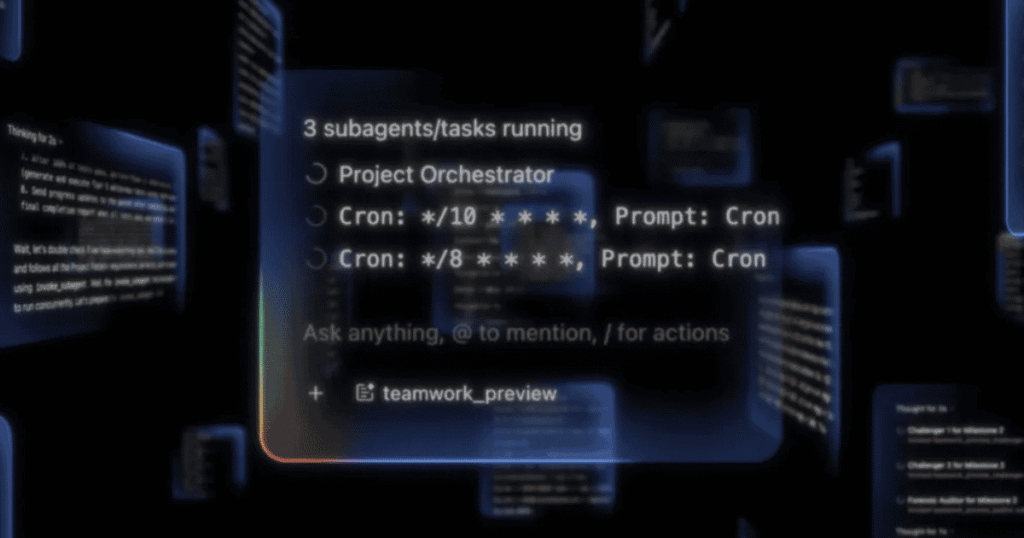
You can run multiple agents in parallel. One codes a website while another handles brand assets. It’s a full agent coordination hub, and it’s sitting on your desktop.
Safety
It wouldn’t be a major tech keynote without someone mentioning safety.
Google is bringing SynthID and C2PA verification to Search, Chrome, and the Gemini app. These are tools designed to help people identify AI-generated content and verify what they’re looking at online.
They’re also deploying DeepMind’s CodeMender agent to secure their own platforms, and launching Gemini for Science to give researchers AI tools for their work.
Whether these measures keep pace with everything else Google launched in the same breath is a question worth sitting with.