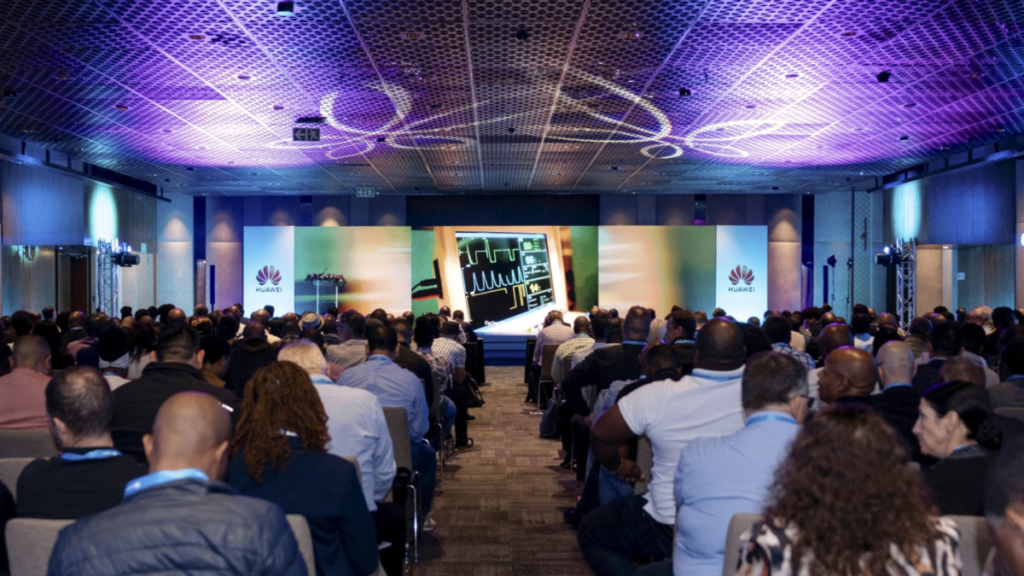

The rise of AI is putting new pressure on infrastructure as organisations reconsider how they store, manage, protect and use data. Against this backdrop, Huawei’s annual IT Day focused on the growing need for intelligent computing.
The event drew more than 400 customers and partners, with Huawei showcasing its latest AI data infrastructure, all-flash storage and virtualisation. The conversation centred on the growing need for closer collaboration as businesses face cyber threats and the demands of AI.
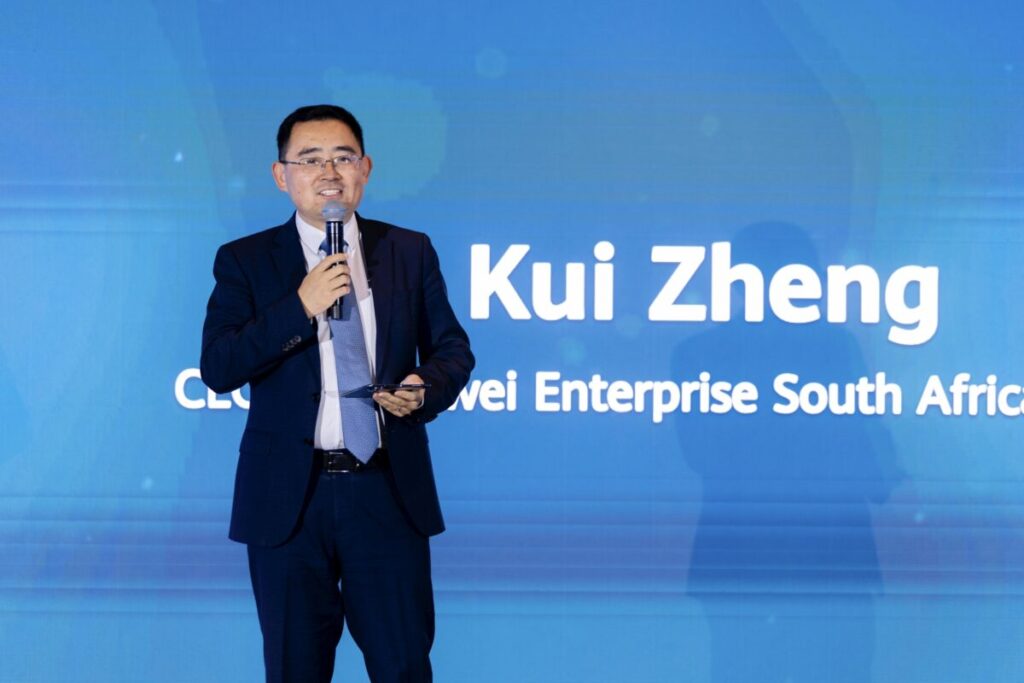
Kui Zheng, CEO of Huawei Enterprise Business Group in South Africa, said this year’s IT Day is built around a critical question: how do organisations future-proof data storage and unlock the true value of data in the AI era?
The question is especially relevant in South Africa, where digital transformation is already driving infrastructure upgrades.
Kui described South Africa as both a key player in the global economy and a pioneer of innovation. “From government to transportation, finance, and energy, we’ve seen South African organisations lead the charge in upgrading ICT infrastructure, accelerating digital transformation, and improving lives.”
He outlined four of the main areas Huawei plans to focus on:
- Data protection to help keep businesses running during cyber threats or infrastructure failures,
- Data centre virtualisation to improve performance while reducing overhead,
- AI computing to unlock new insights and efficiency,
- Smart office tools to support more connected collaboration.
Building AI-ready infrastructure
Huawei showcased OceanStor Dorado as its flagship storage platform for mission-critical workloads. Naveen Kumar, Principal Architect of Storage Division, said as AI and the token economy grow, so does the amount of data that organisations have to handle. This in turn, puts extra pressure on enterprise infrastructure.
He said Dorado V7 is designed to meet those demands by improving performance, supporting SAN, NAS and S3 in one system, and strengthening the security needed for critical enterprise environments.
Clinton George, Solution Architect of Huawei Enterprise Data Centre Solution Department, said Huawei’s answer to modern data centre demands is DCS, which he described as a full stack data centre virtualisation solution. “Without information, there’s no AI. AI depends on information. And as organisations and governments go through that journey from information to digitalisation and then strive to reach that intelligent space, we see many operating at different points along that curve. This is why many governments deploy AI strategies and national digital strategies,” he said.
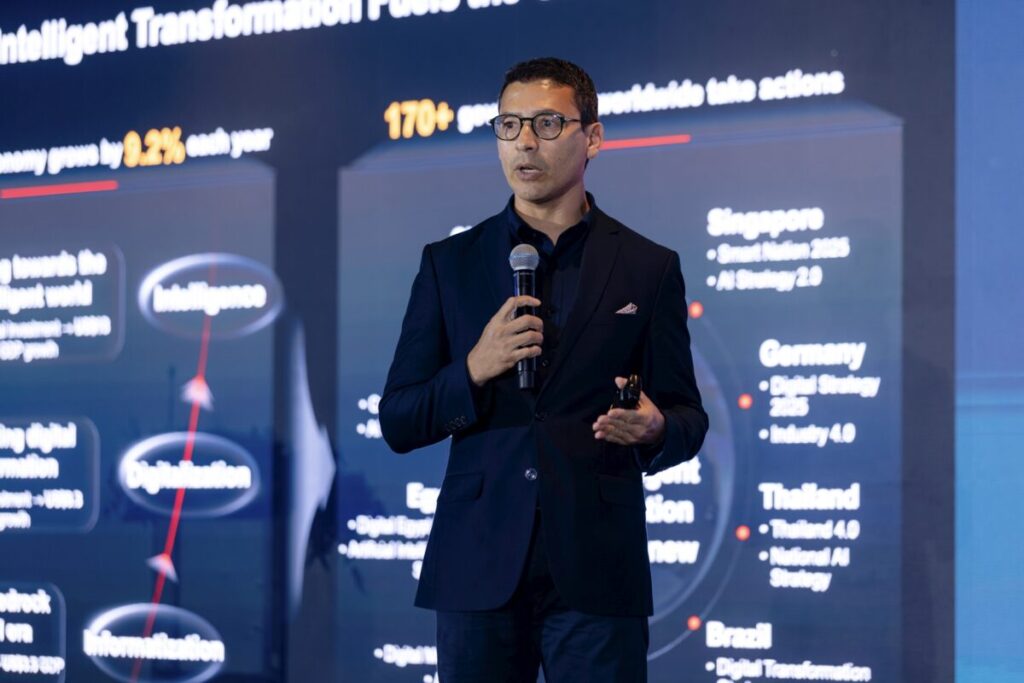
Huawei also highlighted its Atlas AI computing portfolio, with Allen Ye, Director of Huawei Computing Marketing & Solution Department, focusing on the growing infrastructure demands created by enterprise AI adoption.
He said the rise of AI-native applications and the token economy is driving demand for more computing power, with Atlas positioned as part of Huawei’s response to the infrastructure businesses need to scale AI workloads. According to Ye, inference demand is expected to grow faster than training over the next five years, catch up this year, and reach 4.5 times last year’s level by 2030. He pointed to the token economy as one of the hottest themes in AI right now.
Huawei also showcased Atlas 950 SuperPoD, a liquid-cooled AI computing cluster for larger AI workloads. It can scale to 8,192 NPUs and support trillion-parameter model training, while its interconnection and Unified Bus technology help ease the bandwidth, latency and bottleneck problems that often come with traditional clusters.
James Kamau Maina, Huawei’s Intelligent Collaboration Solution Architect, presented IdeaHub as the workhorse of the modern meeting room and a key part of the company’s AI Classroom push. Maina said large deployments can be managed through IdeaManager, which handles configuration and diagnostics at scale.
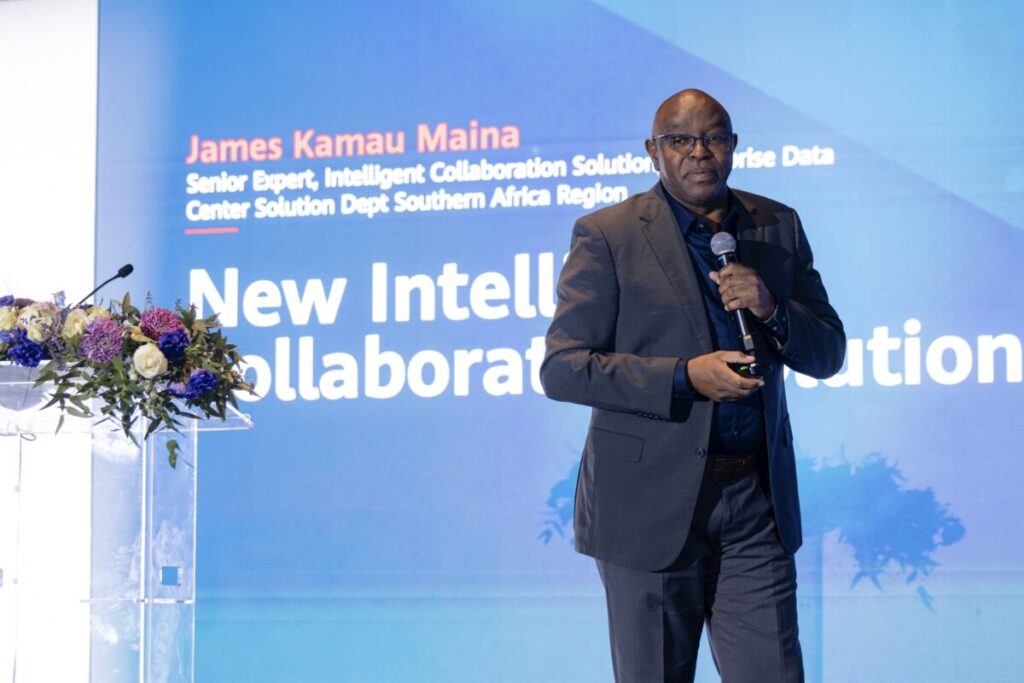
IdeaHub supports wireless projection without requiring devices to be on the same network. Up to 40 devices can be connected at once and nine projecting simultaneously. It also includes eye-protection features.
ALSO READ: Xinghe: Huawei spotlights AI-driven networking and cybersecurity at IP Club 2026
Real-world application
The programme featured customer and partner success stories, showing how organisations are already using Huawei technologies in real-world environments to modernise operations.
Aadhir Maharaj, Solution Sales Data Centre Specialist at Altron Digital Business, said the partnership between Altron and Huawei focuses on helping South African businesses build stronger technology infrastructure. The partnership, which now spans 14 years, is supported by 91 Huawei engineers across South Africa and has delivered more than R5 billion in project value.
According to Maharaj, that kind of footprint matters at a time when businesses are under growing pressure to turn AI ambition into real operational value.
Lu Peng, Director of the Huawei South Africa Data Center Solution Sales Department, introduced OceanClub, a global non-profit technical community focused on data storage exchange and collaborative problem-solving.
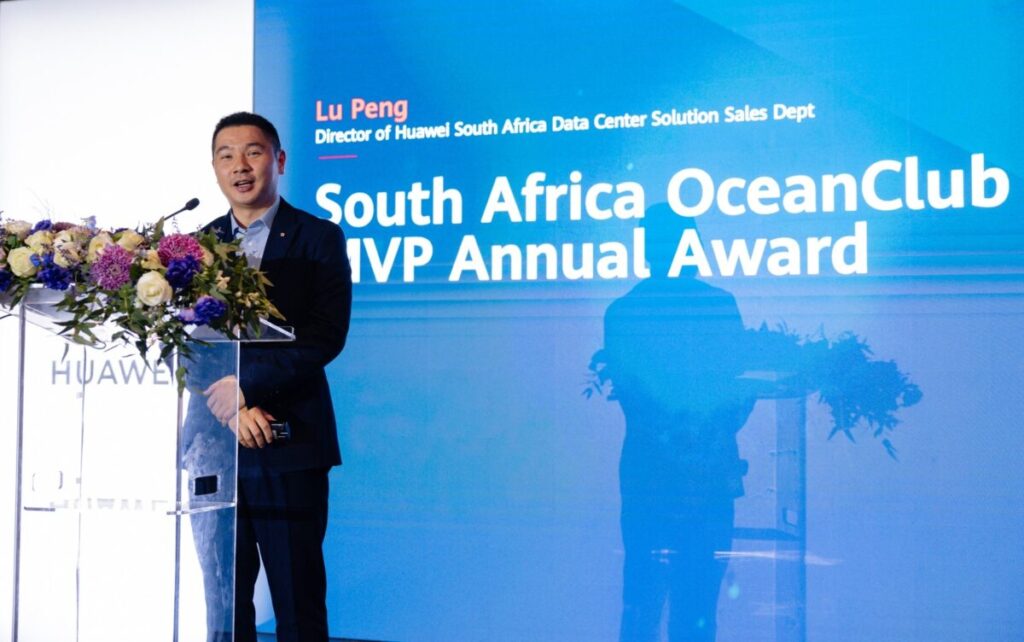
The programme closed with the 2026 OceanClub MVP awards, which recognised South African professionals for their contributions to data infrastructure, innovation and knowledge sharing. The local honourees were Aadhir Maharaj, Michael Khutlane, Laure Le Roux and Gareth Smith.
Looking ahead, Huawei will continue building on its work in the data centre space while working closely with customers and partners to support South Africa’s digital transformation.
About Huawei
Huawei is a leading global provider of information and communications technology (ICT) infrastructure and smart devices. With integrated solutions across four key domains – telecom networks, IT, smart devices, and cloud services – we are committed to bringing digital to every person, home and organisation for a fully connected, intelligent world.
Huawei’s end-to-end portfolio of products, solutions and services is both competitive and secure. Through open collaboration with ecosystem partners, we create lasting value for our customers, working to empower people, enrich home life, and inspire innovation in organisations of all shapes and sizes.
At Huawei, innovation focuses on customer needs. We invest heavily in basic research, concentrating on technological breakthroughs that drive the world forward. By December 31, 2024, Huawei had 208,000 employees, 54.1% of which were R&D employees. In 2024, our total R&D spending reached CNY179.7 billion, representing 20.8% of our total revenue. We operate in more than 170 countries and regions, serving more than three billion people worldwide. In 2024, through the efforts of all employees, the company achieved an estimated annual sales revenue of CNY862.1 billion, aligned with forecasts. Founded in 1987, Huawei is a private company fully owned by its employees.